

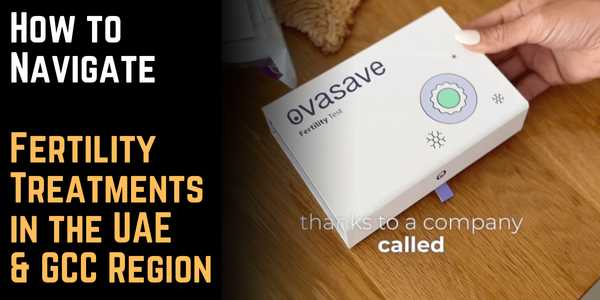
How to Navigate Fertility Treatments in the UAE & GCC Region
Fertility challenges affect many couples worldwide, and the UAE and broader GCC region are no exceptions. With changing lifestyles, later marriages, and increasing awareness of reproductive health, more women and couples are seeking fertility treatments to realize their dreams of parenthood.

Navigating fertility care can feel overwhelming due to complex options, cultural sensitivities, and varying healthcare systems. Consulting the
best fertility doctor
is essential for receiving personalized care.
This guide helps women and couples in the UAE and GCC navigate fertility treatments—from early assessments to advanced options. We also introduce tools like
Ovasave,
which simplify access to fertility care through at-home hormone testing and expert guidance.
Understanding Fertility Challenges in the UAE & GCC
Countries such as the UAE, Saudi Arabia, Qatar, Oman, Kuwait, and Bahrain experience fertility challenges at rates higher than the global average. Around 15–20% of couples face infertility due to:
- Later marriage and conception ages
- Sedentary lifestyles, diet, and stress
- Higher prevalence of PCOS
- Environmental and genetic factors
Recognizing these challenges highlights the importance of early and informed intervention.
Step 1: Early Fertility Assessment
Before starting treatment, a fertility assessment provides critical insights and enables personalized care.
Key Tests and Evaluations
- Hormone Testing: Measures AMH, FSH, LH, and thyroid levels.
AMH testing
estimates ovarian reserve. - Ultrasound Scans: Assess ovarian and uterine health.
- Semen Analysis: Evaluates male fertility factors.
- Medical History: Identifies underlying health or lifestyle issues.
Ovasave
offers convenient at-home hormone testing using finger-prick blood samples, reducing unnecessary clinic visits.
Step 2: Choosing the Right Fertility Clinic
When selecting a fertility clinic in the UAE or GCC, consider the following:
- Accreditations & Success Rates
- Range of Services (IUI, IVF, ICSI)
- Cultural Sensitivity & Privacy
- Multilingual Staff
- Transparent Pricing
Cities like Dubai, Abu Dhabi, Riyadh, and Doha host internationally recognized fertility centers.
Step 3: Fertility Treatment Options
Ovulation Induction
Medications stimulate ovulation for women with irregular cycles.
Intrauterine Insemination (IUI)
Sperm is placed directly into the uterus during ovulation.
In Vitro Fertilization (IVF)
Eggs are fertilized in a lab and embryos transferred to the uterus.
ICSI
A single sperm is injected into an egg—ideal for male factor infertility.
Egg Freezing
Preserves fertility for women delaying pregnancy or undergoing medical treatment.
Step 4: Legal & Ethical Considerations
- Gamete donation is restricted in many GCC countries
- Surrogacy is often prohibited
- Embryo storage laws vary
- Legal marriage documentation is required
Step 5: Cost & Financial Planning
- IVF cost in UAE: AED 15,000–30,000 per cycle
- Medications: AED 5,000–10,000
- Multiple cycles may be required
Using tools like Ovasave can reduce initial costs by optimizing early di


About Author
