

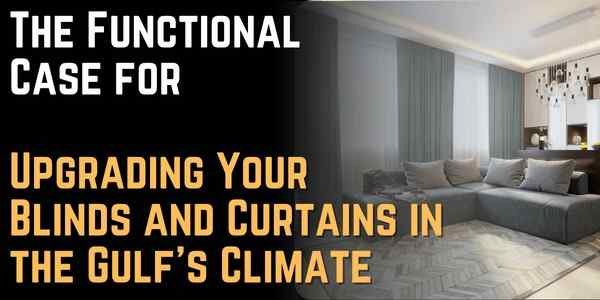
The Functional Case for Upgrading Your Blinds and Curtains in the Gulf’s Climate
Most people choose blinds and curtains based on how they look. That’s understandable — window treatments are among the most visible elements of any room, and their aesthetic impact is real and immediate. But in the UAE and KSA, there’s a stronger and more practical argument for getting your window treatments right, one that goes well beyond interior design. The climate of the Gulf region places demands on homes and buildings that most other parts of the world simply don’t experience — and quality blinds and curtains in Dubai and across the region are one of the most effective tools available for managing those demands. If you’ve been thinking of window treatments as a decorative decision, it’s worth reconsidering that position.
The Heat Problem Is Bigger Than It Looks
Summer temperatures in the UAE and Saudi Arabia regularly push past 45°C — and untreated windows let a significant amount of that heat straight into your home. Solar radiation through bare glass warms interior spaces, making them uncomfortable to live in and expensive to cool. South- and west-facing windows carry the highest risk, as direct afternoon sun can raise a room’s temperature considerably, putting real pressure on air conditioning systems that were never designed to fight both the outdoor climate and an unshaded interior simultaneously.
Quality window treatments — particularly those made with thermal or blackout fabrics — act as a barrier between solar radiation and your interior. The physics are straightforward: fabric that blocks or reflects incoming sunlight reduces the heat load on a room before the air conditioning even has to engage. The result is a cooler interior environment that requires less cooling to maintain, resulting in lower energy consumption and reduced utility bills over time.
The impact is more significant than most people expect. Research on building energy performance in hot climates consistently identifies window treatments as one of the most cost-effective ways to reduce cooling loads — easier to implement than structural changes and faster to deliver results than most other upgrades a homeowner might consider.
UV Protection That Preserves Your Interior
Solar radiation doesn’t just generate heat — it carries ultraviolet light that causes real, cumulative damage to interiors over time. Furniture upholstery, timber flooring, rugs, artwork, and painted surfaces all degrade under sustained UV exposure. The fading and discoloration that results isn’t always immediately obvious, but over months and years of Gulf sunlight streaming through untreated windows, the effect on the quality and appearance of an interior becomes significant.
Window treatments with UV-filtering properties — including specific lining fabrics and technical roller blinds designed for solar control — intercept a meaningful proportion of that UV radiation before it reaches interior surfaces. For homeowners who have invested in quality furniture, flooring, and décor, this protection has real financial value. The cost of replacing faded upholstery or refinishing damaged timber flooring consistently exceeds the cost of the window treatments that would have prevented the damage.
Privacy Without Compromising Light
Privacy management in the Gulf context has a distinct dimension that differs from that in many other regions. In densely developed urban areas — whether in Dubai, Abu Dhabi, Riyadh, or Jeddah — residential units often face other buildings, busy streets, or shared communal spaces, making daytime privacy a genuine concern. The standard solution — keeping curtains or blinds fully closed — solves the privacy problem but creates a light problem, leaving interiors dark and reliant on artificial lighting during hours when natural light should be available.
The right window treatment solves both problems simultaneously. Sheer curtains allow natural light to filter through while obscuring direct sightlines into a room. Solar roller blinds maintain views outward while preventing clear visibility inward. Layered window treatment systems — combining a sheer layer with a heavier blockout option — give occupants the flexibility to manage privacy and light independently throughout the day. This kind of functional flexibility is one of the primary reasons custom-made window treatments deliver a meaningfully different result from off-the-shelf alternatives that offer limited adjustment options.
The Case for Motorized Systems in the Gulf
The functional argument for quality window treatments in the UAE and KSA becomes even more compelling when automation is introduced. Motorized curtains in Dubai and across the region allow window treatments to be operated remotely — by app, remote control, or integrated smart home system — which changes how practically they can be used.
Manual curtains and blinds tend to be operated infrequently — adjusted in the morning and left in place for the rest of the day — because the friction of frequent operation is enough to discourage regular adjustment. Motorized systems remove that friction entirely. Treatments can be scheduled to close automatically at the hottest part of the day, adjusted with a single button press as light conditions change, and integrated with smart home systems that manage them alongside lighting, air conditioning, and other environmental controls.
For villas and larger homes across the Gulf with multiple large windows — particularly south- and west-facing windows that require active management during the afternoon — this kind of automated control transforms window treatments from a static installation into a dynamic system that actively contributes to comfort and energy management throughout the day.
Commercial and Hospitality Applications
The same logic applies beyond the home. Commercial properties — hotels, offices, retail spaces — across the UAE and KSA face identical solar heat gain and UV challenges, and often at considerably greater scale. The large glazed facades that characterize modern Gulf architecture look striking from the outside but create significant thermal and UV management demands on the inside, which quality window treatments are well positioned to address.
In hotels, the connection between window treatments and guest experience is direct — room comfort, sleep quality, and the ability to control light and heat all depend on it, as does the energy cost of maintaining comfortable room temperatures. In office environments, solar glare on screens and overheated workstations near glazed walls are everyday productivity problems that the right blinds or curtains resolve without structural intervention. For retail and commercial spaces, UV damage to merchandise and interior finishes is an ongoing operational cost — one that quality solar control treatments can significantly reduce.
The investment in well-specified, properly installed window treatments for a commercial property is typically recovered through energy savings, reduced maintenance costs, and the operational benefits of a more comfortable interior environment — often within a timeframe that makes the decision straightforward from a financial perspective.
Getting It Right From the Start
The functional benefits of quality window treatments are most fully realized when the right product is specified for each window’s specific orientation, size, and exposure. A south-facing window in a Riyadh villa has different requirements from a north-facing bedroom in a Dubai apartment — and selecting a single product type across an entire property without considering these variables leaves functional value on the table.
Professional consultation — including an assessment of each window’s orientation, the room’s use, and the occupant’s privacy and light management needs — ensures that the product specified for each application is the one that will perform best in that specific context. In a region where the climate places genuine demands on buildings and their occupants, that level of care in the selection process pays for itself through the installation’s performance and longevity.


About Author
