

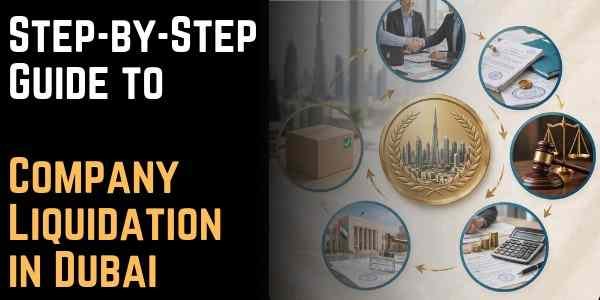
Step-by-Step Guide to Company Liquidation in Dubai
Closing a business in a global financial hub like the United Arab Emirates requires careful planning, strict adherence to local regulations, and precise administrative execution. Whether you are restructuring your corporate operations, retiring, or concluding a specific business venture, navigating the process of Company Liquidation in Dubai correctly is critical to avoid legal liabilities, heavy penalties, and future visa or financial complications.
In this comprehensive guide, we walk you through the essential steps, requirements, and legal frameworks involved in officially winding down a business entity in Dubai.
Understanding Company Liquidation in the UAE
Company liquidation—often referred to as winding up or dissolving a business—is the formal legal process of closing a company, selling off its assets, settling outstanding debts, and canceling its trade license.
In the UAE, the framework for company closure is designed to protect all stakeholders, including business owners, creditors, employees, and government authorities. Failure to complete the required liquidation procedures may result in penalties, unresolved liabilities, or other legal and regulatory consequences, depending on the circumstances. To support a smooth process, working alongside international legal experts like Gurcan Partners helps navigate complex cross-border corporate regulations.
Key Types of Business Liquidation in Dubai
Before starting the procedure, it is important to identify the legal structure of your entity, as liquidation rules vary slightly depending on where and how the business was incorporated:
- Voluntary Liquidation: Initiated by the shareholders when the company is solvent and capable of clearing all its financial liabilities and operational debts.
- Involuntary / Compulsory Liquidation: Initiated through a court order, usually requested by creditors due to insolvency, prolonged financial losses, or major regulatory breaches.
- Mainland vs. Free Zone Liquidation: Mainland entities fall under the jurisdiction of the Department of Economy and Tourism (DET), whereas Free Zone companies (such as DMCC, IFZA, or JAFZA) are governed by their respective authority’s specific rules and regulations.
Step-by-Step Company Liquidation Process in Dubai
Depending on the company’s legal form and jurisdiction (such as Dubai mainland or a specific free zone), closing a business in Dubai typically involves a structured procedure, which often includes the appointment of a liquidator and final license cancellation.
Phase 1: Initiation and Liquidator Appointment
1. Passing the Shareholders’ Resolution
The required shareholder/partner resolution approving the dissolution of the company must be adopted in accordance with the company’s legal form, constitutional documents, and applicable regulations. If required by law or authority regulations, this resolution must be notarized by a UAE Public Notary.
2. Appointing an Official Company Liquidator
Where required by the company’s legal form and the rules of the relevant authority, a qualified liquidator must be officially appointed. The liquidator takes charge of managing the winding-up process, reviewing financial statements, and preparing the official liquidation report.
3. Submitting Initial Application to Authorities
Submit the initial liquidation documents to the relevant licensing body (DET for Mainland or the respective Free Zone Authority). Upon approval, the authority issues a preliminary liquidation certificate, allowing you to proceed with public notifications and clearances.
4. Public Announcement Notice
Where required by the relevant authority or company law, a public notice of liquidation must be published in two local daily newspapers (at least one of which must be in Arabic). This notice provides creditors and third parties with the applicable statutory or authority-prescribed period to submit any financial claims against the company.
Phase 2: Clearances, Settlements, and Cancellation
1. Employee Visa Cancellations and Gratuity Settlement
All employee visas sponsored under the company must be canceled. Business owners are legally required to settle all outstanding salaries, end-of-service benefits (gratuity), and leave allowances in full before canceling employment visas.
2. Obtaining Government Clearances
The company must secure official clearance certificates (No Objection Certificates – NOCs) from various government departments and utility providers, including:
- Federal Tax Authority (FTA): Deregistration from Corporate Tax and Value Added Tax (VAT), ensuring all tax returns are filed and settled.
- Dubai Electricity and Water Authority (DEWA): Final bill settlement and utility disconnection.
- Telecommunications Providers: Settling accounts with Etisalat / du.
- Ministry of Human Resources and Emiratisation (MoHRE): Ensuring no active labor files remain open.
- Customs Department: (If applicable for import/export businesses).
3. Bank Account Closure
Once all operational clearances and payments are completed, the corporate bank account must be closed. Where required by the relevant authority, the bank will issue an official account closure letter to support the final license cancellation.
4. Final Liquidator Report & License Cancellation
Upon completion of the applicable public notice period, resolution of all creditor claims, and submission of the required liquidation report, the relevant authority issues the De-registration Certificate upon payment of final fees, officially dissolving the entity.
Essential Documents Required for Liquidation
While exact requirements depend on the jurisdiction, the general documentation checklist includes:
- Official Board Resolution for dissolution.
- Valid trade license copy and Commercial Register certificate.
- Memorandum of Association (MOA) and Articles of Association (AOA).
- Acceptance letter from the appointed registered liquidator.
- Public newspaper announcement copy.
- Clearances from FTA, DEWA, MoHRE, and Customs.
- Corporate bank account closure letter.
- Passports and Emirates ID copies of shareholders and directors.
Why Professional Legal & Tax Assistance Matters
Navigating tax deregistration with the Federal Tax Authority (FTA), drafting legal resolutions, and settling corporate liabilities can be complex. Working with experienced legal consultants and auditors can help ensure that the liquidation process is handled in accordance with applicable UAE laws and reduce the risk of future compliance issues or disputes.
For a detailed breakdown on legal requirements, step-by-step procedures, and necessary documentation, read our complete analysis on Company Liquidation in Dubai to make sure your closure process is executed efficiently and without delay.


About Author
