

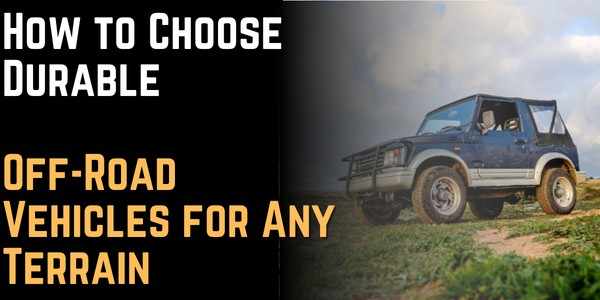
How to Choose Durable Off-Road Vehicles for Any Terrain
Buying the wrong off-road rig is a costly lesson, and most people only need to learn it once. Whether you’re pushing through remote mountain passes, navigating backcountry hunting roads, or just trying to survive another brutal winter commute, durable off-road vehicles are engineered to absorb punishment over and over again, not just look aggressive parked outside a coffee shop.
This buying guide exists for a simple reason: “buy once, cry once” isn’t just a saying. It’s survival advice. Jumping into a purchase without a clear framework means cracked parts, blown budgets, and a rig that taps out the moment terrain gets real.
Consider this: according to SEMA, 62% of pickup owners buy off-road parts or take their vehicles off-road, with roughly 80% using their trucks specifically for outdoor recreation. That’s not a fringe hobby anymore. It’s the mainstream, and it deserves a serious, structured approach.
The Decisions You Need to Make Before You Shop
Walk onto any dealer lot without a clear picture of your actual needs, and you’ll be at the mercy of a salesperson who wants to move inventory. Before you evaluate a single spec sheet, you need to get brutally honest with yourself about how, where, and how aggressively you actually plan to use this machine.
Matching Your Vehicle Category to Actual Terrain
With your use case clearly in mind, match it to the right vehicle type. Compact crossovers handle mild forest roads well enough, but they struggle badly under sustained trail punishment.
Body-on-frame SUVs and full-size pickup trucks offer better long-term durability for serious off-road use. ATVs and UTVs become the smarter call when trails get genuinely narrow, steep, or technical.
Utah’s terrain is the perfect example of why honest matching matters. Moab slickrock and west desert sand dunes are completely different animals, and both demand vehicles selected with a real purpose. If you’re searching for an atv dealer utah enthusiasts genuinely count on, Karl Malone Powersports Provo stocks Can-Am, Polaris, Yamaha, and other respected brands. Their service team can configure machines specifically for Utah terrain, which saves buyers from the guesswork that leads to regret.
Budget Honesty: Sticker Price Isn’t the Whole Story
Once you know your vehicle category, the money conversation can’t be avoided. And it needs to go deeper than the purchase price alone. Fuel, insurance, routine maintenance, and trail repairs accumulate quickly.
Factory off-road packages frequently deliver better long-term value than piecemeal aftermarket builds, where component compatibility becomes its own problem. Realistically, light trail builds start around $25,000–$35,000. Serious overlanding or trail-ready setups can reach $50,000 or more when built properly.
What Genuinely Separates a Durable Off-Road Vehicle from One That Just Looks the Part
Marketing copy and aggressive styling don’t keep you on the trail. Specific engineering does. Durable off-road vehicles share measurable traits across frame construction, suspension design, drivetrain integrity, and protection systems. Knowing what to look for lets you compare candidates on merit, not brand loyalty.
Frame and Chassis: The Foundation Matters
Body-on-frame construction handles repeated trail stress far better than unibody designs, full stop. Frame thickness, crossmember placement, and factory recovery point integration all reflect how seriously a manufacturer engineered for real off-road use.
When reviewing used vehicles, examine frame rails closely for rust, cracked welds, or patched repairs. Any of those findings is a deal-breaker, not a negotiating chip.
Suspension: Articulation, Strength, and Serviceability
Solid axles offer simpler serviceability and superior articulation on rocky terrain. Independent front suspension delivers more on-road comfort but introduces more failure points under sustained abuse.
Check control arms, bushings, ball joints, and tie rods carefully; worn components here get expensive fast. A suspension that bottoms out under a loaded overlanding rig signals a factory tune that was never meant for serious work.
Drivetrain and Gear Ratios Built for Real Terrain
Raw horsepower is largely irrelevant on technical terrain. Strong axles, appropriate crawl ratios, and a genuine low-range transfer case matter far more.
Locking differentials, front, rear, or both, deliver traction gains that electronic management systems simply can’t fully replicate in extreme conditions. On any used vehicle, verify that 4WD engagement, low-range, and locker functions all work cleanly before handing over money.
Evaluating Terrain-Ready 4×4 Vehicles for Where You Actually Wheel
Understanding universal durability traits is solid groundwork, but terrain-ready 4×4 vehicles need evaluation through the specific lens of your actual environment.
|
Terrain Type |
Critical Durability Factor |
Watch For |
|
Rocky/Technical |
Approach angles, armor |
Bent skid plates, frame damage |
|
Desert/Sand |
Cooling, dust sealing |
Overheating history, clogged filters |
|
Mud/Wet Backcountry |
Sealed electrics, easy cleaning |
Corroded connectors, bearing wear |
|
Snow/Ice |
Weight distribution, rust prevention |
Salt corrosion, traction control faults |
Rocky terrain demands solid axles where available, genuine skid protection, and tight low-range gearing. Desert running punishes cooling systems and filtration hardest; oversized radiators and transmission coolers aren’t optional for serious desert rigs.
Mud quietly destroys bearings, seals, and electrical connectors over time. A thorough post-mud washdown and inspection routine isn’t obsessive; it’s what separates vehicles that last from vehicles that don’t.
How to Actually Compare the Best Rugged SUVs for Trail Use
With a clear terrain picture established, you’re ready to evaluate specific platforms. The best rugged SUVs for trail use earn that designation through hard specs, not aggressive grille designs or dramatic ad campaigns.
Score SUV candidates against ground clearance (a minimum of 8–9 inches for real trail work), suspension travel, tow rating, factory skid plate coverage, and aftermarket support depth. A strong owner community and accessible parts availability are genuine long-term assets, not just pleasant bonuses.
Balancing Family Utility with Real Trail Capability
Combining family comfort with trail performance requires honest trade-offs. A modest lift, quality all-terrain tires, and proper recovery points can meaningfully extend a family SUV’s capability without voiding the warranty or destroying highway manners. But pushing that same family rig into hardcore rock crawling territory is an invitation to expensive repairs and a frustrated family.
Technology and Aftermarket Depth as Long-Term Investments
Factory terrain modes, trail cruise control, and underbody camera systems add genuine value. But deep aftermarket support, bumpers, lockers, armor, and lift kits from respected brands keep a platform trail-relevant for years beyond its production run. Orphaned models with limited parts availability age poorly, regardless of how capable they were on launch day.
Beyond SUVs: Trucks, ATVs, and UTVs Deserve Serious Consideration
A complete off-road vehicle buying guide can’t stop at SUVs. Trucks, ATVs, and UTVs frequently outperform SUVs in specific, well-defined roles, and dismissing them is leaving real capability on the table.
Industrial utility vehicles are deployed across construction sites, campuses, and landscaping operations for moving people, equipment, and supplies across rough, uneven terrain. That professional track record reflects real-world durability under demanding daily conditions, which carries direct weight when evaluating UTVs for serious trail or ranch use.
Trucks as Dual-Purpose Work and Trail Machines
Trucks deliver serious payload and towing advantages that SUVs simply can’t match. However, long-wheelbase platforms can struggle on tight switchbacks and narrow trails.
When inspecting used trucks, watch for sagging rear springs, bent hitch receivers, and uneven tire wear; these are signs of a vehicle that’s been worked hard without corresponding maintenance.
ATVs and UTVs for Technical and Narrow Terrain
When terrain gets too tight or aggressive for a full-size vehicle, a purpose-built ATV or UTV is often the most durable, practical answer available. Evaluate roll cage quality, CVT belt accessibility, suspension geometry, and mud and water sealing thoroughly before committing to any specific machine.
Modifications Worth Making, and the Ones That Quietly Destroy Rigs
Not every modification improves durability. Some popular choices quietly accelerate wear faster than trail abuse ever would.
Quality all-terrain tires represent the single highest-return first upgrade for most trail rigs. Better puncture resistance, appropriate sidewall height, and proper load ratings protect wheels and suspension components simultaneously.
Avoid oversized wheels that sacrifice sidewall height; they transfer impact energy directly into suspension components rather than absorbing it through the tire where it belongs.
Lift Strategies That Preserve Geometry
Modest lifts of two to three inches, paired with quality shocks and corrected control arm geometry, deliver meaningfully better real-world performance than aggressive lifts that stress driveline angles and accelerate ball joint wear.
Always pair any lift with matching brake line extensions, corrected panhard bars where applicable, and a professional alignment immediately after installation.
Armor and Recovery Gear: Cheap Insurance Against Expensive Mistakes
Skid plates, rock rails, and heavy-duty differential covers are inexpensive protection against catastrophic damage.
A quality winch and properly rated recovery points prevent the repeated hard yanking impacts that quietly damage frames and mounts over time, damage that doesn’t show up immediately but accumulates into serious structural problems.
Build the Right Shortlist, Then Inspect Ruthlessly
The framework is straightforward once you commit to it. Define your terrain and use case first. Choose the right vehicle category. Verify durability features against objective criteria rather than marketing claims. Then commit to smart modifications and consistent maintenance over the long haul.
Durable off-road vehicles don’t require extreme builds or outrageous budgets; they require honest choices and disciplined upkeep. Start your shortlist today, inspect every candidate thoroughly, and consult local 4×4 specialists or powersports experts before finalizing any purchase.
A genuinely terrain-ready 4×4 vehicle built for your actual life is worth every minute of due diligence.
Frequently Asked Questions
Is a used body-on-frame 4×4 more durable than a new crossover with an off-road package?
Generally, yes. Proven body-on-frame platforms handle repeated trail stress more reliably than unibody crossovers, which can fatigue under sustained abuse despite capable marketing. Always inspect the frame condition thoroughly on used vehicles.
Which is better for long-term durability: solid axles or independent suspension?
Solid axles are simpler and stronger for hardcore trail use. Independent suspension offers better daily comfort but introduces more wear points. Mixed-use drivers typically do fine with IFS on moderate trails when quality components are used throughout.
How much ground clearance is truly enough for everyday trails and forest roads?
Eight to nine inches handles most forest roads and moderate trails comfortably. Approach and departure angles matter equally; a high-clearance vehicle with poor angles will still drag its bumpers on steep entries.


About Author
