
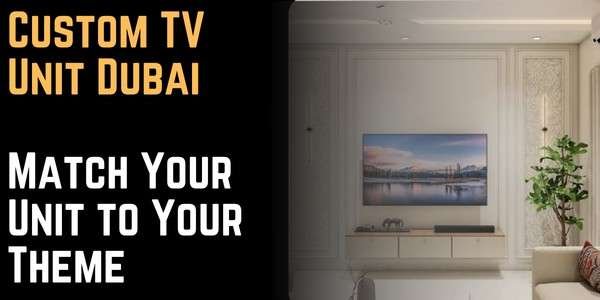
Custom TV Unit Dubai: How to Match Your Unit with Your Interior Theme
Quick answer: A Custom TV Unit Dubai matches an interior theme through four factors together, the material finish, the unit shape, the color against the wall, and the size relative to the room. There is no single correct combination. Each interior style calls for a different mix, and this guide walks through them one by one.
Over the years, working alongside teams like RAM Furniture, I have seen homeowners in Dubai try almost every approach to picking a TV unit, some go by trend, some by what fits the budget, some just match whatever the sofa color is. Every method has trade offs, and none of them work the same way in every home.
This guide is meant to lay out the actual factors that go into matching a TV unit to a room, without pushing you toward one particular style or setup. By the end, you should be able to look at your own space and know which direction fits, not because it is trending, but because it fits your room.
Why the TV Unit Affects the Whole Room’s Feel
The TV unit is usually the largest piece of furniture on its wall, sometimes in the entire room. Because of its size, it has more influence on how the room reads than a side table or a lamp.
When it matches the room, it tends to disappear into the background in a good way, letting the rest of the decor stand out. When it does not match, it can make even a well decorated room feel unfinished.
This is simply a matter of scale and visibility, not a reason to treat one style of unit as superior to another.
Matching Material to Interior Style
Material is usually the first thing to decide, since it affects how formal, warm, or minimal the unit will feel. Different interior styles tend to pair with different materials, though none of these are fixed rules.
- Minimalist and Scandinavian interiors often use matte laminate or light oak veneer, keeping the surface calm and uniform.
- Modern and contemporary interiors commonly use a mix of matte and gloss finishes, sometimes combined with metal accents.
- Glam and luxury interiors tend to use high gloss lacquer, mirrored panels, or stone finishes for a reflective, polished look.
- Classic and transitional interiors often use natural wood tones or detailed wood paneling.
- Industrial and Japandi interiors typically use raw or matte wood combined with black metal frames.
Each of these is a common pairing, not a rule. A modern apartment can just as easily use a warm wood finish, and a classic living room can use a simpler matte panel if that suits the owner’s taste.
Floating vs Floor-Standing: Two Valid Approaches
This is one of the more common questions homeowners ask, and it depends entirely on the room rather than one option being better overall.
When a Modern TV Unit Dubai Style Leans Floating
A Floating TV Unit Dubai keeps the floor visible underneath, which can make a smaller room feel more open. It also pairs naturally with a Media Wall TV Unit setup that includes concealed lighting or paneling across the wall.
When Floor-Standing Units Suit a Room Better
Floor-standing units add visual weight and extra storage, which works well in larger rooms or in interiors where a grounded, formal look fits the overall theme, such as classic or transitional spaces.
Comparing Floating and Floor-Standing Units
Feature | Floating TV Unit | Floor-Standing Unit |
Best suited for | Smaller or minimalist rooms | Larger or more traditional rooms |
Visual effect | Opens up floor space | Adds a grounded, formal presence |
Storage capacity | Limited to wall-mounted sections | Generally more storage and drawer space |
Installation | Requires strong wall mounting | Simpler, placed directly on the floor |
Cleaning | Easier to clean underneath | Needs moving furniture to clean underneath |
Both options serve different room types well. Which one fits depends on the size of the space, the storage needed, and the overall theme of the room, not on one being a better product than the other.
Matching Color to the Room, Not Just the Sofa
Color is often the last thing homeowners think about, even though it is one of the more visible mismatches when done incorrectly.
A TV Cabinet Dubai sits against the wall for most of the day, so matching its tone to the wall color usually creates a more balanced look than matching it to the sofa alone.
- On neutral or plain walls, both light and dark units generally work well.
- On accent walls or textured wallpaper, a simpler, quieter tone tends to sit better than a unit that competes with the pattern.
- In rooms with warm lighting, wood tones read differently than they do under cool white lighting, which is worth checking in person before finalizing a finish.
Sizing the Unit to the Room
Size is another factor that affects how well a unit fits a theme, regardless of material or color.
- Small to mid-size rooms usually suit a compact or floating unit, so the unit does not dominate the wall.
- Large living rooms can typically support a wider or floor-standing unit without the room feeling crowded.
- Open-plan spaces sometimes benefit from a longer media wall unit that spans a larger section of wall, tying the seating and entertainment areas together.
Common Mistakes to Avoid When Matching a TV Unit
- Matching the unit color only to the sofa, while ignoring the wall it sits against
- Choosing a unit size based on a photo online rather than the actual wall dimensions
- Overlooking cable management, which can make even a well matched media wall unit look cluttered
- Selecting a finish under showroom lighting without checking how it looks under the room’s actual lighting
- Assuming one interior style only works with one type of TV unit, when several combinations can work depending on personal preference
Ready-Made vs Custom-Built Units
Both ready-made and custom-built units are common choices in Dubai homes, and each comes with its own considerations.
Ready-made units are generally quicker to source and come in standard sizes and finishes, which works well when the wall dimensions and desired look already match what is available.
Custom-built units, such as the Custom TV Unit Dubai service, are built to the exact wall measurements and chosen finish, which is useful when the wall size is non-standard or when a specific material or color combination is needed.
Neither route is inherently better. The right choice depends on the wall dimensions, timeline, and how closely the finished piece needs to match the room’s existing theme.
Bringing It All Together
Matching a TV unit to an interior theme comes down to looking at material, shape, color, and size together, rather than choosing based on one factor alone. Every interior style has more than one combination that works, so the right choice depends on the specific room, not a general rule.
If you are updating a living room or planning one from scratch, it can help to sample the finish against the wall color and check the sizing before finalizing a design.
RAM Furniture works with homeowners across Dubai on both custom and made-to-measure furniture, helping match units to the room rather than pointing everyone toward the same style. If you want guidance on what would suit your space, get in touch for a free consultation.
Frequently Asked Questions
What is the best material for a TV unit in a Dubai apartment? It depends on the interior style. Matte laminate and light wood veneer suit minimalist spaces, while gloss lacquer or stone finishes suit glam or luxury interiors.
Is a floating TV unit better than a floor-standing one? Neither is universally better. Floating units suit smaller or minimalist rooms, while floor-standing units suit larger rooms needing more storage or a formal look.
How do I match my TV unit color to my living room? Matching the unit to the wall color behind it, rather than just the sofa, tends to create a more balanced look, since the unit sits against the wall for most of the day.
Should I choose a ready-made or custom TV unit? It depends on the wall size and desired finish. Ready-made units work when a standard size and finish fit the space, while custom units suit non-standard walls or specific design needs.
Does a media wall TV unit need special installation? Most media wall setups require wall mounting and planned cable concealment, which is generally arranged during the design or installation stage.


About Author
