

Oxygen Therapy Dubai: Facts vs. Marketing
Walk through any wellness expo, hotel spa menu or new fitness concept in Dubai this year and you’ll run into the same word again and again: Oxygen. Oxygen bars have opened in malls and cafés. Longevity-focused hotel suites now list hyperbaric chambers alongside cold plunges and infrared saunas. Recovery studios market “oxygen sessions” the way they used to market massages. For a resident or regular visitor trying to figure out whether any of this is worth their time, the terminology gets confusing fast and the products behind it are not all the same thing.
It’s worth untangling, because “oxygen therapy” now covers at least three genuinely different experiences with different levels of evidence behind them, and Dubai’s fast-moving, performance-driven lifestyle is exactly the kind of environment where a trend like this spreads before anyone stops to explain it properly.
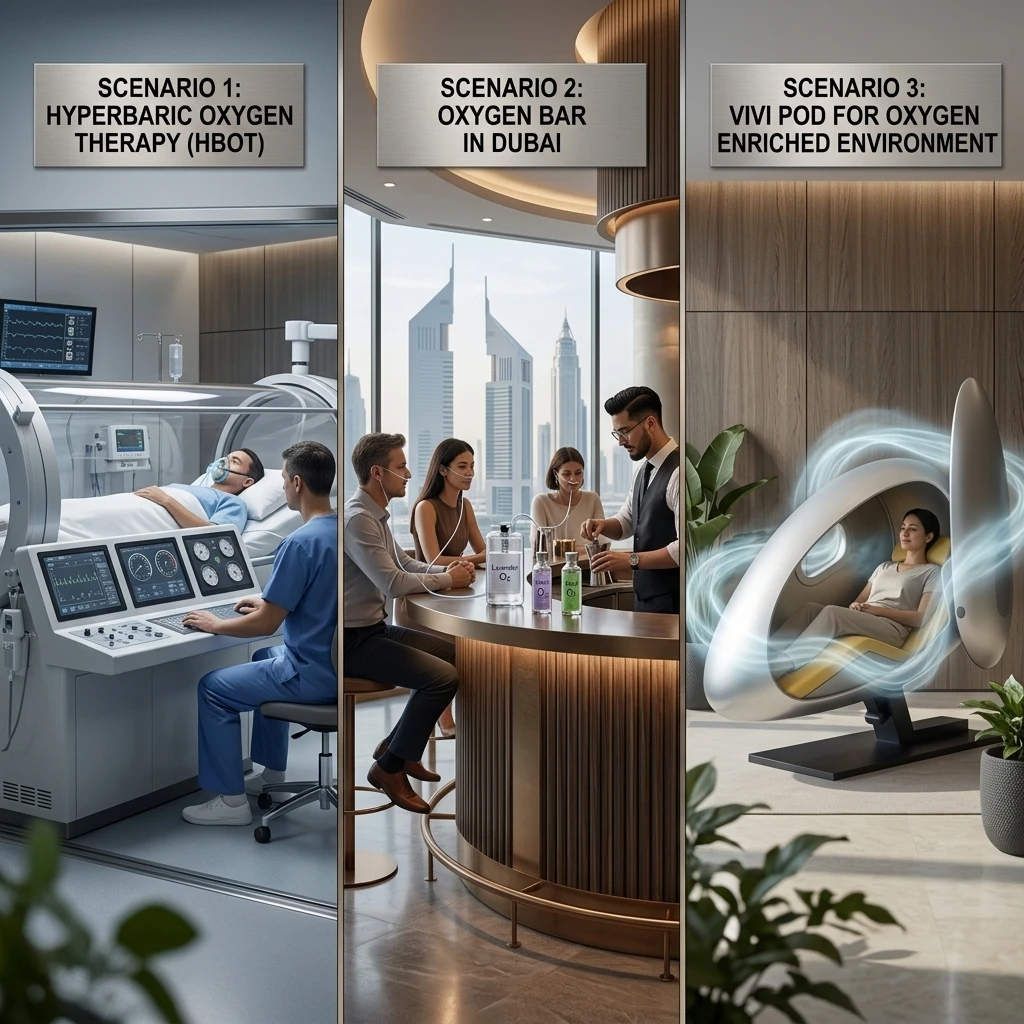
Three different things that all get called “oxygen therapy”
- Hyperbaric oxygen therapy (HBOT) Involves breathing pure oxygen inside a pressurised chamber, typically compressed to somewhere between 1.3 and 2.5 atmospheres. It’s a well-established clinical treatment for specific conditions such as decompression sickness and certain non-healing wounds, and Dubai now has several longevity clinics and dedicated studios offering it in a wellness context, often bundled with cold plunges and IV therapy as part of a broader “recovery circuit.” This is a real medical modality, and it’s also the most heavily marketed version of “oxygen” in the city right now.
- Oxygen bars a handful have opened across Dubai in the past year offer scented, non-pressurised oxygen through a cannula, usually as a short, café-style experience aimed at an instant sense of clarity or a post-flight pick-me-up.
- Oxygen-enriched environments are a third, quieter category: rather than a pressurised chamber or a stand-alone oxygen bar visit, oxygen is delivered at a higher concentration than ambient air as part of a broader recovery setting alongside things like reclined positioning, reduced noise and a private space to switch off. This is closer to how oxygen shows up inside recovery pods than how it shows up in a medical HBOT chamber.
The distinction matters because the research behind each is different, and conflating them is where a lot of the marketing language in this space gets ahead of the science.
What the research on supplemental oxygen actually supports
The strongest, most consistently cited evidence for supplemental oxygen and cognition doesn’t come from hyperbaric studies at all it comes from a series of double-blind, placebo-controlled trials in healthy adults given non-pressurised oxygen at a higher-than-ambient concentration. Researchers at Northumbria University, led by psychopharmacologists Mark Moss and Andrew Scholey, published several of these studies in the late 1990s in the journal Psychopharmacology and elsewhere, comparing oxygen inhalation with room-air controls. Across that body of work, participants who received supplemental oxygen before a task consistently recalled more words and reacted faster than those who breathed normal air, with later trials extending the finding to measures of attention and vigilance (Moss & Scholey, 1996; Moss, Scholey & Wesnes, 1998; Scholey et al., 1999). That’s a real, replicated finding in the peer-reviewed literature, and it’s the mechanism that oxygen-enriched recovery environments are built around: more available oxygen supporting the kind of short-term cognitive performance focus, alertness, working memory that dips during a long or demanding day.
What the research does not support is treating oxygen as a general cure for headaches or fatigue. High-concentration oxygen is a genuinely effective treatment for cluster headache specifically a rare, severe neurological condition administered acutely under medical guidance during an attack. The clearest evidence is a randomised, placebo-controlled trial published in JAMA, which found that patients breathing high-flow oxygen at the onset of an attack were substantially more likely to be pain-free within 15 minutes than those breathing air (Cohen et al., 2009), a finding a subsequent review of the cluster headache literature has since supported (Petersen et al., 2014). None of this evidence extends to ordinary tension headaches or general tiredness, and reputable providers in this space are increasingly careful to keep that distinction clear rather than let “oxygen relieves headaches” become a catch-all claim.
Where a Dubai recovery pod fits into this
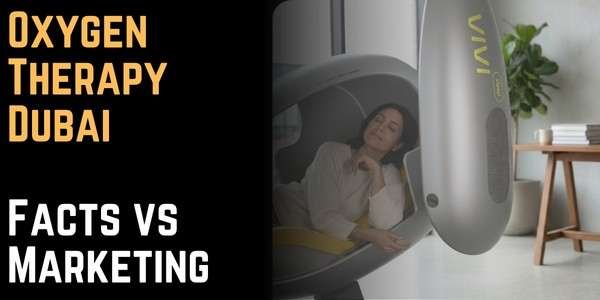
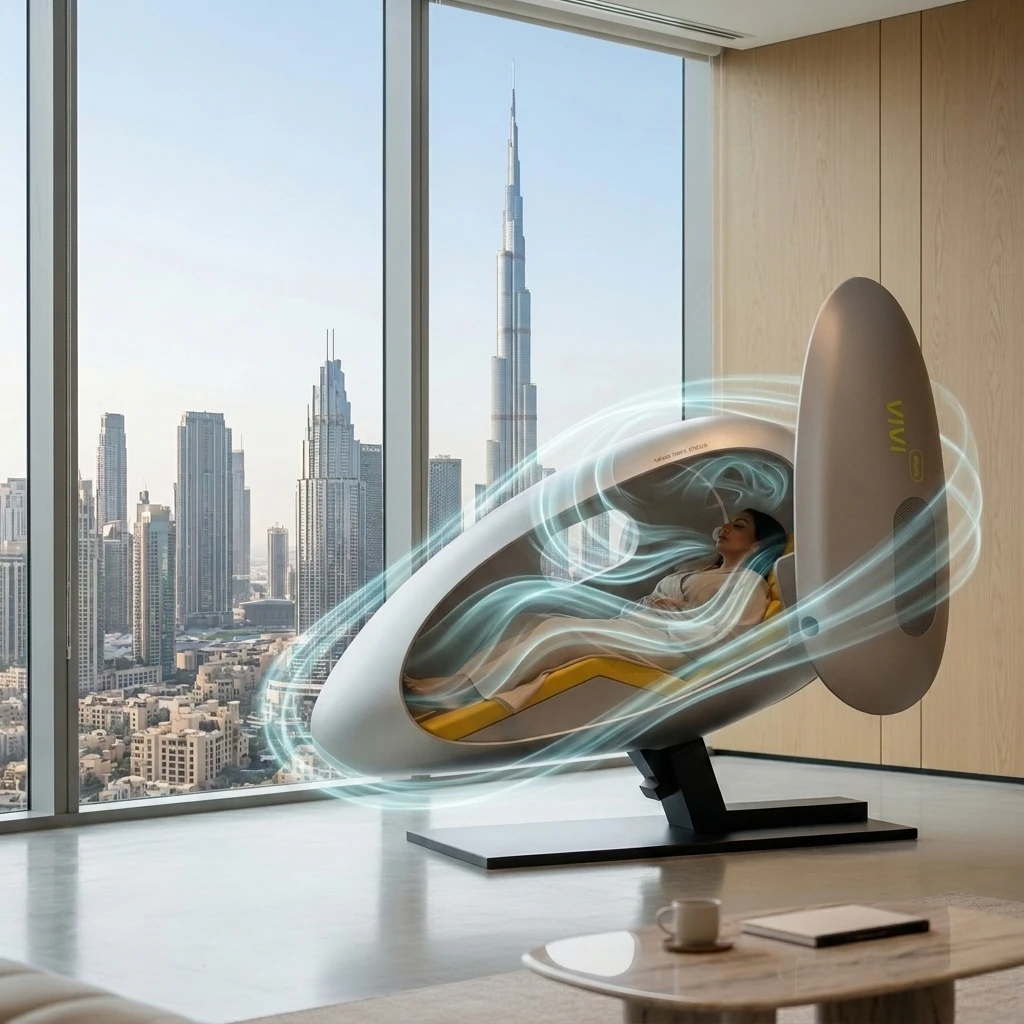
This is where VIVI, a Dubai-based recovery and sleep-pod company, sits closer to the “oxygen-enriched environment” category than to a bar or a hyperbaric clinic. A VIVI session runs around 20-45 minutes inside a private, enclosed pod that combines high-concentration oxygen with zero-gravity seating, a back massage function, a private audio environment and full noise suppression the idea being that oxygen alone isn’t the whole mechanism; it works alongside reduced sensory input and physical rest to produce a short, structured reset rather than a stand-alone “oxygen hit.”
That combination is deliberate. Cognitive recovery depends on cutting sensory load as well as breathing different air a rationale drawn from the broader literature on stimulus reduction and mental fatigue rather than a single study which is why the pod is fully enclosed rather than an open chair with a cannula. The zero-gravity seating is built around Neutral Body Posture, a reclined position first documented by NASA in its research into how the body settles in microgravity and later codified in the agency’s Man-Systems Integration Standards; that same posture research has since been applied to office chairs, car seats and massage chairs designed to reduce spinal load and support circulation (NASA Spinoff, 2020; NASA Spinoff, 2013). The massage function is there for a related but distinct reason: physical recovery benefits from active release of muscular tension, not just passive stillness, which is the general premise behind massage-based recovery tools more broadly.
Oxygen enrichment, in other words, is one input among several rather than a headline claim standing alone. VIVI’s own research page explains the reasoning behind each feature and distinguishes between established evidence and areas where research remains limited, VIVI’s recovery pod features.
VIVI is designed for deployment across Dubai workplaces, event spaces and public venues such as malls and coworking spaces, positioning the oxygen-enriched recovery pod less as a wellness treatment and more as a short, accessible reset that fits into the gaps of an ordinary day after a workout, between meetings, after a flight, or simply when the afternoon dip hits. VIVI’s recovery pods are designed for short-duration rest and recovery in workplaces, coworking spaces, events and public venues.
Conclusion: How to think about it if you’re choosing between options
- If what you’re after is a genuine medical treatment for a diagnosed condition, that’s a conversation for a licensed clinic offering supervised HBOT not a wellness pod or an oxygen bar.
- If you want a quick, sociable pick-me-up, an oxygen bar delivers exactly that experience without much of a claim beyond how it feels in the moment.
- And if what you’re actually looking for is a structured way to reset, focus and energy during a busy day without booking a full spa circuit or stepping into a pressurised chamber an oxygen-enriched recovery pod is built specifically for that narrower, shorter use case.
None of these three replace each other, and none of them should be marketed as if they do. The clearest way through Dubai’s oxygen-wellness moment is knowing which of the three you’re actually booking.
FAQ: Oxygen and recovery in Dubai
Is oxygen-enriched air the same as hyperbaric oxygen therapy?
No. Hyperbaric oxygen therapy involves breathing oxygen inside a pressurised chamber, typically used clinically for specific medical conditions. Oxygen-enriched environments, like the air inside a recovery pod, deliver oxygen at a higher concentration than normal room air without pressurisation.
Does oxygen therapy relieve headaches?
High-concentration oxygen is an established treatment for cluster headache specifically, given under medical supervision during an attack, with a randomised controlled trial published in JAMA supporting its effectiveness. It isn’t an established treatment for ordinary tension headaches or general fatigue.
What does the research say about oxygen and focus?
Controlled, peer-reviewed studies in healthy adults most notably a series of trials out of Northumbria University in the late 1990s found that supplemental oxygen at higher-than-ambient concentration is linked to measurably better word recall, reaction time and attention compared with breathing regular air.
Are oxygen bars and recovery pods the same thing?
No. Oxygen bars typically offer a short, scented oxygen session on its own. Recovery pods combine oxygen enrichment with other elements such as zero-gravity seating, massage and full sound isolation aimed at a broader physical, mental and cognitive reset.
Do I need a prescription to use an oxygen-enriched recovery pod?
No. These are wellness products, not medical treatments, and are typically booked directly through the operator (VIVI), whether that’s a workplace subscription, a pay-per-use activation, or payment through the venue.


About Author
