

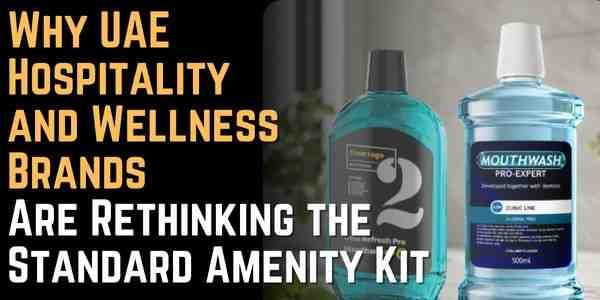
Why UAE Hospitality and Wellness Brands Are Rethinking the Standard Amenity Kit
Walk into a good hotel, dental clinic, wellness centre, or premium gym in the UAE and you will notice that the experience is built from small details. The lobby scent, the lighting, the water bottle, the towel, the reception desk, and even the way a product is placed in the washroom all say something about the brand.
That is why the old approach to amenities is starting to feel tired.
For years, many businesses treated oral-care products as emergency extras. A guest forgot something, so the front desk handed over a basic toothbrush kit. A clinic gave patients a standard sample pack. A gym placed generic mouthwash beside the sinks. The products were useful, but they rarely felt connected to the business providing them.
Today, that is a missed opportunity. In a market where hospitality, healthcare, retail, and wellness businesses compete heavily on experience, everyday products can do more than solve a practical problem. They can reinforce the brand, improve convenience, and stay with a customer after the visit is over.
Mouthwash is a particularly interesting example. It is familiar, easy to understand, and relevant in several business settings. With the right formula, format, and packaging, it can become part of a guest amenity programme, a dental aftercare kit, a corporate wellness box, a premium retail range, or a travel-focused personal-care line.
The key is to stop thinking of it as a generic bottle and start thinking of it as a product designed for a specific customer moment.
The UAE Customer Experience Is Built on Details
Businesses in Dubai, Abu Dhabi, Sharjah, and the other emirates serve a remarkably varied audience. Residents, business travellers, tourists, families, expatriate professionals, and wellness-focused consumers may all walk through the same doors, but they do not always expect the same experience.
That variety creates a challenge. A product has to be easy to understand, pleasant to use, and suitable for the environment where it is offered. It may also need bilingual packaging, clear instructions, a travel-friendly size, or a formula that fits the positioning of the business.
A five-star hotel and a neighbourhood dental clinic will not need the same mouthwash. Neither will an airline lounge and a boutique fitness studio. The mistake is assuming they should all buy the same generic product simply because the category is familiar.
A better starting point is the customer journey.
What is the person doing immediately before using the product? Where will they use it? How long will they keep it? Will they take it home? Is the product being offered as a complimentary amenity, sold at retail, or included in a professional care kit?
Those questions quickly reveal what the product needs to become.
|
Business setting |
A practical mouthwash opportunity |
|
Hotel or serviced apartment |
A compact, neatly branded bottle for guest bathrooms or request-based amenity kits |
|
Dental clinic |
A professional-looking take-home product that supports the clinic’s aftercare experience |
|
Gym or fitness club |
A convenient freshness product for members getting ready after training |
|
Wellness or beauty business |
An alcohol-free or mild-tasting option aligned with a more comfortable self-care routine |
|
Travel or corporate gifting company |
A leak-resistant format designed for kits, flights, meetings, and short stays |
|
Retail or e-commerce brand |
A distinctive formula and package created for repeat purchase under the company’s own name |
The product is the same category, but the commercial role can be completely different.
Private Label Is Not Just About Printing a Logo
Some business owners hear “private label” and picture a standard product with a new sticker on the front. That is the simplest version of the model, but it is not the only version.
A well-planned private-label project can involve choices about flavour, colour, active ingredients, alcohol content, fluoride, bottle size, cap style, labelling, outer packaging, and the overall look of the product. Depending on the project, a business may start with an existing base formulation or work towards something more customised.
The important word here is planned.
Adding custom features without a reason can increase cost and complexity without improving the customer experience. A bright colour may look attractive in a presentation but feel wrong for a clinical brand. A strong flavour may seem memorable but become unpleasant when used daily. A large bottle may offer better value per millilitre but make no sense in a hotel room or travel kit.
Good product development connects every choice to the intended user and use case.
For example, a wellness retreat may prefer a softer flavour and alcohol-free positioning. A premium dental clinic may want a clean, professional design and a formula that fits its approach to patient care. A youth-focused e-commerce brand may choose more expressive packaging and a fresher, more playful identity.
The logo matters, but the experience around it matters more.
Why Mouthwash Works Well in Hospitality
Hotels spend a great deal of time thinking about what guests will remember. Usually, it is not one huge feature. It is a collection of smaller moments: an easy check-in, a comfortable bed, good water pressure, a useful amenity, and the feeling that somebody anticipated what the guest might need.
Oral care fits naturally into that experience because travel disrupts routines. People arrive after long flights, go directly from the airport to meetings, attend dinners, or realise late at night that they forgot something at home. A compact bottle of mouthwash can be a simple but genuinely useful touch.
It can also support a hotel’s identity. A design-led property may want minimalist packaging that looks good beside the other bathroom amenities. A resort may prefer a fresh botanical direction. A business hotel could prioritise convenience and portability. A family property might focus on clear labelling and approachable flavours.
This does not mean every room needs another collection of single-use plastic bottles. Businesses can consider several distribution models: placing products in selected room categories, offering them on request, including them in premium amenity kits, using refill systems where appropriate, or selling larger versions through the hotel shop.
The right approach depends on guest expectations, operating costs, and the property’s sustainability goals. The important thing is that the decision feels intentional rather than automatic.
Dental Clinics Can Extend the Patient Experience Beyond the Chair
A dental appointment may last less than an hour, but the patient’s impression of the clinic continues after they leave. Instructions, follow-up communication, aftercare, and take-home products all shape whether the experience feels organised and professional.
A customised mouthwash can become part of that wider relationship. It may be included in a post-treatment pack, provided after a hygiene appointment, or sold as part of the clinic’s recommended home-care range. When the packaging carries the clinic’s identity, the product also keeps the practice visible in the patient’s daily routine.
That does not mean a clinic should treat a branded product as a replacement for individual professional advice. Different patients have different needs, and product selection should remain appropriate to the context in which it is offered.
From a business perspective, the value comes from consistency. If a clinic recommends high standards during treatment, the take-home experience should reflect those standards. A leaking cap, confusing instructions, or overly harsh flavour can weaken the impression the clinic worked hard to create.
The product therefore needs to be evaluated as carefully as any other customer-facing part of the practice.
The Manufacturer Becomes Part of the Business Model
Developing a mouthwash involves more than choosing a flavour and bottle. The formula, filling process, packaging compatibility, stability, labelling, quality checks, and production schedule all need to work together.
Most hospitality groups, clinics, retailers, and wellness businesses do not need to build those capabilities internally. Doing so would add equipment, technical staff, facilities, and fixed costs that have little to do with their core business.
Instead, they can work with a specialist private label mouthwash manufacturer that can support formulation choices, customised packaging, product design, filling, and quality control. This gives the business access to manufacturing capability while allowing its own team to remain focused on brand, distribution, sales, and customer experience.
The arrangement works best when the buyer arrives with a clear brief. A useful brief should explain the intended customer, business setting, bottle size, preferred flavour direction, desired formulation features, branding requirements, expected order quantity, target market, and launch timeline.
“Make it premium” is not a clear brief. “Create a mild, alcohol-free mouthwash in a compact bottle for executive hotel guests, with understated bilingual packaging” gives the development team something concrete to work with.
Clear communication saves time on both sides.
Packaging Has to Work in the Real UAE Environment
Packaging is often judged first by how it looks on a screen. That is understandable; the visual identity helps the product feel real. But packaging also has a job to do.
It needs to protect the formula, close properly, survive transport, remain readable, and feel convenient in the customer’s hand. For a product moving through warehouses, delivery vehicles, hotel storerooms, clinics, and retail shelves, performance matters just as much as appearance.
The UAE’s climate and logistics conditions make practical testing especially important. Products may encounter heat during transport or storage, even when businesses take reasonable precautions. A bottle and cap should therefore be chosen with real distribution conditions in mind, not only how they look in a product photograph.
Bilingual design also needs care. English and Arabic information should remain clear without making the label feel crowded. Important instructions should be easy to find. The brand must leave enough space for required product information before filling every centimetre with marketing copy.
A polished package is not one that says the most. It is one that communicates the right things clearly and still works when somebody is using it with wet hands beside a sink.
Inventory Discipline Matters More Than a Huge Product Range
The excitement of creating a branded product can lead businesses to launch too many variations at once. Different flavours, colours, bottle sizes, and customer segments all sound like growth opportunities. In reality, each variation creates another inventory line to forecast, finance, store, and sell.
For a first launch, one well-designed product is often more useful than six loosely connected options.
A hotel group might test a compact mouthwash in a few properties before expanding it across the portfolio. A dental clinic could begin with one take-home format and listen to patient feedback. An e-commerce brand may launch a single hero product before adding bundles or related oral-care items.
This staged approach gives the business real information. Which customers use the product? What do they say about the flavour? Does the bottle size suit the setting? How quickly does stock move? Are people willing to purchase a full-sized version?
Good operators let those answers shape the next order. They do not treat the first production run as the final version of the business.
A Product Can Support Both Experience and Revenue
A private-label mouthwash does not have to remain a complimentary cost. Depending on the business, it may also create a retail opportunity.
Hotels can sell full-sized versions of popular amenities. Clinics can build a carefully selected home-care range. Wellness businesses can create branded kits. Travel companies can include compact oral-care products in premium packages. Online brands can use mouthwash as the first product in a broader daily-care portfolio.
The commercial model should be decided early because it affects the product design. A free hotel amenity has a different cost target from a premium retail item. A clinic product may need a more professional visual language than a social-media-led lifestyle brand. A gift set may require an outer box that a standalone product does not need.
Trying to make one version serve every purpose usually leads to compromise. It is better to define the role of the product and build around it.
What UAE Businesses Should Ask Before Starting
Before requesting samples or quotes, a business should answer a few straightforward questions.
Who is the product for? Where will it be used? Is it complimentary, retail, or both? What experience should the flavour create? Does the brand prefer alcohol-free or other specific formulation directions? What bottle size is practical? Will the label need English and Arabic? How much stock can the company reasonably hold? Which documents and approvals will be required for the intended market?
The answers do not need to be perfect. They simply need to be clear enough to begin a productive conversation.
A strong manufacturing partner can then help identify what is realistic, where customisation adds value, and which decisions may increase time, cost, or minimum order quantities.
That transparency is more valuable than a quotation that looks attractive but leaves important questions unanswered.
Small Details Can Become Strong Business Assets
Mouthwash is not the first thing most people think of when they hear “customer experience.” That is exactly why it can work.
It appears in a private, practical moment when the customer wants to feel fresh and prepared. If the product is pleasant, convenient, and visually connected to the business, it creates a small positive impression. If it is poorly made or awkward to use, it creates the opposite.
For UAE hotels, clinics, gyms, wellness centres, retailers, and travel brands, the opportunity is not simply to place a logo on a bottle. It is to create an oral-care product that belongs naturally in the experience they already provide.
That requires a clear audience, sensible formulation choices, functional packaging, disciplined inventory planning, and a reliable production partner. None of those elements is especially flashy on its own. Together, they turn a basic amenity into something more useful: a product customers remember, trust, and may even choose to buy again.


About Author
