

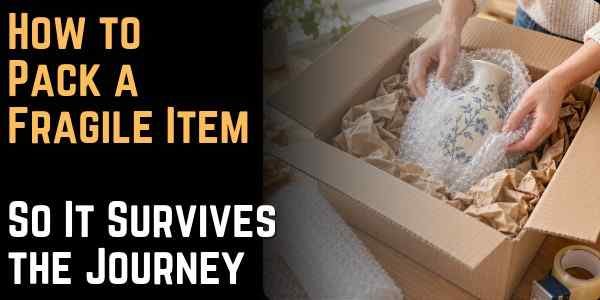
How to Pack a Fragile Item So It Survives the Journey
Sending a fragile item can be nerve-racking. Whether it’s a glass ornament, an electronic device or a sentimental gift, nobody wants to discover that something arrived damaged.
The good news is that careful packaging can significantly reduce the risk of damage during transport.
From choosing the right box to preventing movement inside the parcel, a few practical steps can make all the difference.
Here’s how to prepare fragile items for courier delivery in the UAE.
Start With the Right Packaging Materials
Before wrapping anything, gather the materials you’ll need.
A strong cardboard box, suitable cushioning, packing tape and protective wrapping are usually the essentials.
When comparing delivery companies uae residents can use for local collections, it’s worth considering whether the provider accepts fragile items and what packaging requirements apply.
Preparing your parcel before collection can help make the handover more straightforward.
The packaging should be suitable for the item’s size, weight and fragility, as well as the journey it needs to make.
Avoid choosing a box simply because it’s the closest available size. A box that’s too small may leave insufficient space for protection, while an oversized box can allow the contents to move.
Choose a Strong, Appropriately Sized Box
The outer box provides the first layer of protection.
For lighter fragile items, a good-quality corrugated cardboard box may be sufficient. Heavier or particularly delicate objects may require double-walled cardboard or specialist packaging.
Previously used boxes can sometimes be reused, but only if they’re clean, dry and structurally sound.
Check the corners, edges and base for signs of damage.
If the cardboard has become soft, torn or weakened, it’s better to replace it rather than risk the contents.
Ideally, the box should leave enough room for protective cushioning on every side of the item.
Wrap Each Fragile Item Separately
One of the most common packing mistakes is placing several fragile objects together without individual protection.
Even when items are packed inside the same box, they can knock against one another during movement.
Wrap each object separately using suitable protective material.
Bubble wrap, foam sheets and protective paper can all be useful, depending on the item.
Pay particular attention to vulnerable areas such as handles, corners, screens and decorative edges.
For glassware, additional protection around thin stems or projecting parts may be necessary.
If you’re sending multiple objects, consider cardboard dividers to keep them apart.
The aim is to prevent direct contact between fragile surfaces.
Don’t Leave Empty Space Inside the Box
Once an item is wrapped, the next step is ensuring it cannot move freely.
Empty space inside a parcel allows its contents to shift when the box is lifted, placed down or transported.
Use suitable void-fill material to occupy the gaps.
Crumpled packing paper, air cushions and foam inserts are common options.
However, lightweight materials may not provide enough support for heavier objects.
The cushioning should be firm enough to restrict movement without placing excessive pressure on the contents.
Before sealing the box, gently move it to check whether anything shifts inside.
If you can hear or feel movement, additional cushioning may be needed.
Protect Electronics With Extra Care
Electronic devices require particular attention because damage isn’t always immediately visible.
A laptop, tablet or other electronic item may appear intact externally but still suffer internal damage if exposed to a significant impact.
Where possible, use the manufacturer’s original packaging, especially if it includes moulded protective inserts.
Otherwise, choose packaging designed to support the device securely and protect vulnerable surfaces.
Remove loose accessories and wrap them separately.
Protect screens from direct pressure, and avoid placing heavy objects against delicate components.
Devices containing lithium batteries may also be subject to specific transport restrictions, so check the courier’s requirements before booking.
Seal the Parcel Properly
Good packaging can still fail if the box opens during transport.
Use strong packing tape designed for parcel sealing rather than ordinary household tape.
Apply tape along the main opening and reinforce the edges where necessary.
For heavier boxes, sealing the centre seam and adjoining edges in an H-shaped pattern can provide additional security.
Avoid using string or loosely attached materials that could catch on other objects.
The finished parcel should be securely closed, with no exposed openings or loose packaging.
Should You Label the Box as Fragile?
Adding a visible ‘Fragile’ label can help communicate that a parcel requires careful handling.
However, a label should never replace proper packaging.
Even when a courier handles an item carefully, normal transport can involve lifting, turning, loading and unloading.
The parcel therefore needs to withstand ordinary movement without relying entirely on its orientation.
If an item must remain upright, check whether the delivery provider can accommodate that requirement.
Some objects may need specialist transport rather than a standard courier service.
Consider the UAE Climate
The UAE’s climate introduces another factor when preparing certain deliveries.
High temperatures can affect some adhesives, cosmetics, foods, electronics and other temperature-sensitive products.
If an item could be damaged by heat, check whether standard courier transport is appropriate.
Avoid assuming that every delivery vehicle provides temperature-controlled storage.
For sensitive goods, specialist packaging or transport arrangements may be necessary.
It’s also worth protecting items from moisture, dust and direct exposure during collection and handover.
Check Everything Before Collection
Before handing over your parcel, complete a final inspection.
Make sure the box is secure, the contents cannot move excessively and the recipient’s details are correct.
Consider photographing the item and its packaging before sealing the box, particularly if it’s valuable or difficult to replace.
Confirm that the courier accepts the type of item you’re sending and that its dimensions and weight are suitable for the selected vehicle.
For valuable or irreplaceable objects, check the provider’s liability terms and whether additional protection is available.
A Little Preparation Goes a Long Way
Packing fragile items doesn’t need to be complicated, but it does require attention to detail.
The right box, individual wrapping, adequate cushioning and secure sealing all contribute to safer transport.
No packaging method can eliminate every risk, especially for exceptionally delicate objects.
Nevertheless, taking the time to prepare a parcel properly gives it a much better chance of reaching its destination in the same condition it left.
Whether you’re sending a gift across Dubai or arranging a collection elsewhere in the UAE, good packaging is one of the simplest ways to make the delivery experience more reliable.


About Author
