

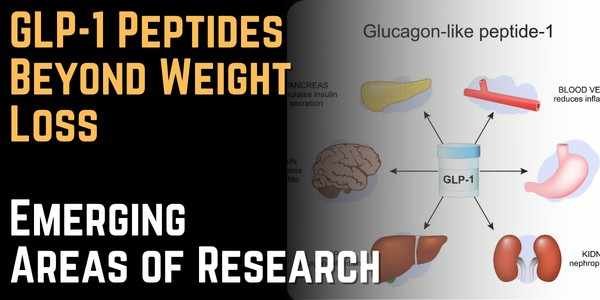
GLP-1 Peptides Beyond Weight Loss: Emerging Areas of Research
GLP-1 peptides have become one of the most discussed subjects in modern metabolic research. While much of the public attention has focused on weight management, researchers are increasingly exploring a broader range of biological mechanisms associated with this class of compounds.
Today, peptides such as Semaglutide, Tirzepatide, and Retatrutide are being investigated for their potential involvement in metabolic regulation, energy balance, cellular signaling, and other physiological pathways. As scientific interest grows, these compounds are becoming important subjects within wellness, longevity, and biohacking research communities.
It is important to note that the compounds discussed in this article are research materials intended for scientific investigation. Ongoing studies focus on understanding biological mechanisms and laboratory applications rather than human therapeutic use.
Understanding GLP-1 Research
GLP-1 (Glucagon-Like Peptide-1) is a naturally occurring hormone involved in metabolic signaling. Researchers study GLP-1 pathways because they play important roles in communication between various biological systems.
Scientific investigations continue to explore how GLP-1-related compounds may influence:
- Metabolic signaling pathways
- Energy regulation mechanisms
- Nutrient processing responses
- Cellular communication networks
- Physiological adaptation processes
These research areas extend far beyond a single application and have helped fuel growing scientific interest in advanced peptide development.
The Evolution of GLP-1 Peptide Research
Early studies primarily focused on understanding the role of GLP-1 within metabolic systems. However, newer generations of peptides have introduced additional areas of investigation.
Researchers are now evaluating compounds designed to interact with multiple biological pathways simultaneously, creating opportunities to explore broader physiological responses.
This shift has contributed to increasing interest in peptides such as Tirzepatide and Retatrutide, which are often discussed alongside Semaglutide in scientific literature.
Semaglutide Research
Semaglutide remains one of the most recognized GLP-1-related compounds in scientific research.
Researchers continue studying its relationship with:
- Metabolic regulation
- Appetite signaling pathways
- Energy utilization mechanisms
- Cellular response systems
Its popularity has helped expand scientific exploration into related compounds and next-generation peptide technologies.
Tirzepatide and Dual-Pathway Research
Tirzepatide has attracted significant interest because researchers classify it as a dual-pathway peptide.
Scientific investigations have explored how its biological activity may differ from traditional GLP-1-focused compounds. Researchers continue evaluating:
- Metabolic adaptation pathways
- Hormonal signaling interactions
- Cellular communication mechanisms
- Energy regulation responses
These studies are helping scientists better understand complex physiological systems and their interconnected pathways.
Why Retatrutide Is Generating Attention
Retatrutide is among the newest peptides attracting attention within metabolic research circles.
Researchers are investigating whether its multi-pathway activity may provide unique opportunities to study:
- Energy balance mechanisms
- Metabolic efficiency pathways
- Biological signaling networks
- Adaptive physiological responses
Because of its advanced design, Retatrutide has become a major topic within peptide research discussions.
Researchers seeking a detailed Retatrutide vs Tirzepatide vs Semaglutide research comparison often review available scientific resources and laboratory information to better understand the distinctions between these compounds and their respective research applications.
Beyond Weight Management
One reason GLP-1 research continues expanding is that scientists increasingly recognize the complexity of metabolic biology.
Current investigations extend into areas such as:
Longevity Research
Researchers are exploring how metabolic pathways may influence healthy aging and long-term physiological function.
Energy Regulation Studies
Understanding how cells process and utilize energy remains a major area of scientific interest.
Biohacking and Optimization Research
The biohacking community closely follows peptide research because of its potential to provide insights into human biology and metabolic performance.
Cellular Signaling Research
Scientists continue studying how peptide compounds interact with communication pathways throughout biological systems.
The Importance of Research Quality
As peptide research grows, quality assurance remains critical.
Researchers typically look for:
- Verified purity testing
- Transparent documentation
- Third-party analysis
- Consistent manufacturing standards
- Reliable laboratory sourcing
These factors help support scientific accuracy and reproducibility.
Looking Ahead
The future of GLP-1 research appears promising as scientists continue investigating increasingly sophisticated peptide compounds.
Emerging research is expected to focus on:
- Multi-pathway peptide technologies
- Metabolic signaling networks
- Longevity-related biology
- Cellular adaptation mechanisms
- Advanced peptide engineering
As knowledge expands, researchers may gain deeper insights into the complex biological systems that influence metabolism and physiological regulation.
Conclusion
GLP-1 peptide research has evolved far beyond its earliest areas of investigation. Today, compounds such as Semaglutide, Tirzepatide, and Retatrutide are helping researchers explore a wide range of metabolic and physiological pathways.
As scientific understanding continues to grow, these peptides will likely remain at the forefront of metabolic, wellness, and biohacking research, providing valuable opportunities to study some of the body’s most important biological systems.
Disclaimer: This article is intended for educational and research purposes only. The compounds discussed are research materials intended for laboratory use only and are not presented as medical treatments or for human consumptio


About Author
