

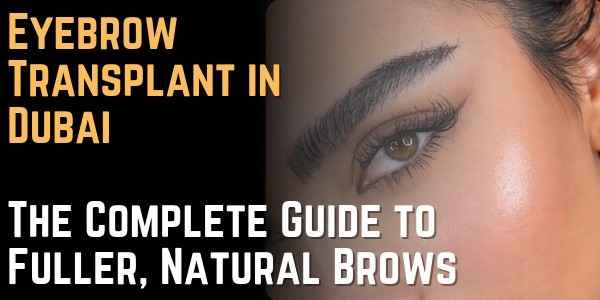
Eyebrow Transplant in Dubai: The Complete Guide to Fuller, Natural Brows
Eyebrows play an important role in facial balance, expression, and overall appearance. They frame the eyes, contribute to facial symmetry, and can influence how facial features are perceived. However, naturally sparse brows, over-plucking, scarring, genetics, and certain medical conditions can leave some people with eyebrows that no longer match their preferred appearance. For those seeking a longer-term solution, an eyebrow transplant may be worth exploring.
Dubai offers a range of aesthetic and hair-restoration services, giving residents and visitors access to different approaches to eyebrow enhancement. Understanding how the procedure works, who may benefit, what recovery involves, and which factors influence the final result can help people make informed decisions before booking a consultation.
What Is an Eyebrow Transplant?
An eyebrow transplant is a procedure in which hair follicles are taken from a donor area, commonly the back or sides of the scalp, and carefully placed into the eyebrow region. The aim is to create a fuller appearance while following the natural direction, angle, and pattern of eyebrow hair growth.
Unlike temporary cosmetic solutions, a transplant introduces living hair follicles into the treatment area. These follicles can continue producing hair after successful transplantation, although results vary depending on individual characteristics, the technique used, and the healing process.
People researching an eyebrow hair transplant in Dubai should understand that the procedure involves more than simply adding hair to sparse areas. The design must account for facial proportions, existing eyebrow density, hair direction, and the patient’s expectations.
Who May Consider Eyebrow Transplantation?
Eyebrow transplantation may be considered by people experiencing several types of eyebrow thinning or hair loss.
Naturally Thin Eyebrows
Some individuals naturally have fine or sparse eyebrows because of their genetics. If eyebrow pencils, gels, or other cosmetic products do not provide the desired appearance, transplantation may be an option to discuss with a qualified practitioner.
Over-Plucking and Long-Term Hair Loss
Repeated plucking, waxing, or threading can sometimes contribute to persistent thinning. Although hair may grow back after stopping these practices, regrowth is not always complete. A professional assessment can help determine whether enough healthy follicles remain and whether transplantation is appropriate.
Scarring and Localised Hair Loss
In selected cases, eyebrow hair loss may follow an injury, burn, or surgical procedure. Transplantation may help restore hair to certain scarred areas, but suitability depends on the condition of the skin, its blood supply, the cause of hair loss, and the stability of the affected area.
Asymmetrical Eyebrows
Some people have uneven eyebrow density or shape. A transplant may help improve balance in carefully selected cases. However, perfect symmetry is not realistic, and natural eyebrows usually have subtle differences between the two sides.
It is important to identify the cause of eyebrow loss before considering treatment. Sudden thinning, patchy hair loss, inflammation, or unexplained changes may require medical evaluation first, since an underlying condition could affect the outcome.
How Does the Eyebrow Transplant Procedure Work?
The exact process varies according to the practitioner, the patient’s needs, and the chosen technique. A typical treatment journey includes several stages.
1. Consultation and Eyebrow Design
The first step is an assessment of the existing eyebrows, donor hair, skin condition, medical history, and desired result. The practitioner evaluates the areas where additional density may be appropriate and discusses realistic expectations.
Eyebrow design is particularly important because eyebrow hair grows at shallow angles and changes direction across different sections. The inner brow, arch, and tail each have their own growth patterns. A suitable design should complement the patient’s facial features rather than follow a one-size-fits-all template.
2. Donor Hair Extraction
Hair follicles are usually collected from a suitable scalp donor area. The extraction method depends on the treatment plan and the practitioner’s approach.
Donor hair selection matters because scalp hair may grow differently from natural eyebrow hair. The practitioner should explain the likely texture, maintenance requirements, and any limitations associated with using scalp follicles for eyebrow restoration.
3. Follicle Placement
The selected follicles are placed into tiny recipient sites within the eyebrow area. Their direction, angle, and spacing are carefully considered to create a natural-looking pattern.
Poorly planned placement can result in hairs pointing in unsuitable directions or an eyebrow shape that appears unnatural. This is one reason why experience with hair restoration and an understanding of eyebrow anatomy are important when choosing a provider.
4. Initial Healing and Follow-Up
After the procedure, the treated area may appear red or swollen, and small scabs can form around the implanted follicles. Patients receive instructions about cleaning, sleeping positions, activity restrictions, and follow-up appointments.
Following the practitioner’s aftercare instructions helps protect the recipient area while it heals.
What Results Can You Expect?
Eyebrow transplant results develop gradually rather than appearing immediately. Some transplanted hairs may shed during the early weeks after treatment. This can be a normal part of the hair-growth cycle and does not necessarily mean that the procedure has failed.
New growth generally becomes noticeable over the following months, with further changes occurring as the follicles establish themselves. The timeline differs from person to person, so patients should ask their practitioner what to expect based on their treatment plan.
Because donor follicles often come from the scalp, transplanted eyebrow hairs may continue growing longer than native eyebrow hairs. Periodic trimming and grooming may therefore be necessary to maintain the desired shape.
The final appearance depends on several factors, including donor hair quality, follicle survival, skin characteristics, placement technique, and individual healing. No practitioner can guarantee a particular density or exact cosmetic outcome.
Eyebrow Transplant vs. Temporary Brow Treatments
People considering fuller eyebrows may also explore microblading, eyebrow tinting, pencils, gels, or other cosmetic approaches. Each option serves a different purpose.
Temporary makeup can provide immediate flexibility and can be removed or changed easily. Tinting may make existing hairs appear more prominent, while microblading creates the appearance of individual strokes through cosmetic pigment application.
An eyebrow transplant, by comparison, involves transferring hair follicles and requires a recovery period. It may offer a longer-term change, but it is a medical procedure with potential risks, costs, and maintenance requirements.
The right choice depends on the individual’s preferences, existing eyebrow hair, budget, tolerance for recovery, and willingness to maintain the result. A consultation can help clarify the differences without assuming that transplantation is necessary for everyone.
How to Choose an Aesthetic Clinic in Dubai
Selecting a provider involves more than comparing promotional photographs or advertised prices. Patients should look for appropriate medical credentials, transparent communication, realistic expectations, and clear information about the procedure.
When researching an aesthetic clinic in Dubai, consider asking the following questions:
- Practitioner qualifications: Who will perform the procedure, and what training and experience do they have in hair restoration?
- Treatment planning: Will the proposed eyebrow design be personalised to your facial features and existing hair pattern?
- Before-and-after examples: Can the clinic provide representative results from comparable cases, with appropriate consent?
- Risks and limitations: Are possible complications, healing expectations, and alternative treatments explained clearly?
- Aftercare arrangements: Who should you contact if you experience unexpected swelling, pain, bleeding, or other concerns?
- Total cost: Does the quoted price include consultation, the procedure, follow-up appointments, and any necessary aftercare?
Patients should also check that the facility and treating professionals hold the appropriate licences and authorisations for the services being provided. A careful consultation should leave enough time to ask questions and consider the options without feeling pressured to proceed.
Recovery and Aftercare Considerations
Recovery instructions depend on the procedure and the patient’s individual circumstances. Mild swelling, redness, tenderness, and temporary crusting may occur during the early healing period.
Patients are generally advised to avoid rubbing or picking at the treated area and to follow the clinic’s guidance about washing, exercise, sun exposure, and skincare products. Makeup or active cosmetic treatments near the recipient area should be avoided until the practitioner confirms they are appropriate.
Contact the treating medical professional if symptoms worsen, redness spreads, discharge develops, or pain becomes increasingly severe. Prompt assessment can help address potential complications.
Before scheduling treatment, patients should also consider work commitments, travel plans, and the time needed for visible signs of healing to settle.
Is an Eyebrow Transplant Worth Considering?
For people with persistent eyebrow thinning who want a longer-term restoration option, an eyebrow transplant may be worth discussing with an experienced practitioner. However, it is not the only solution, and it may not be suitable for every cause of hair loss.
The most useful first step is to understand why the eyebrows have thinned, compare available treatments, and obtain an individual assessment. A well-planned approach should prioritise facial harmony, patient safety, realistic expectations, and informed consent.
Ultimately, the goal is not simply to create denser eyebrows. It is to choose an appropriate treatment that suits the individual’s features, circumstances, and preferences while recognising that healing and results vary from person to person.


About Author
