
Combination Resume: When to Use It and How to Build One
A specialist with 8 years of experience in the UX researcher role wants to switch careers to a product strategy role – their job title says “researcher,” but their actual skills demonstrate the right qualifications for a strategist position. In this scenario, a traditional resume format pushes the candidate’s strongest qualifications to the bottom of the page and reduces the likelihood of being hired.
A combination resume works better in such situations. It leads with your strongest qualifications. That makes it a strong choice for:
- Career changers
- Professionals with employment gaps
- People with diverse experience
In this guide, we’ll tell you when to use this resume format and how to build it section by section.
What Is a Combination Resume?
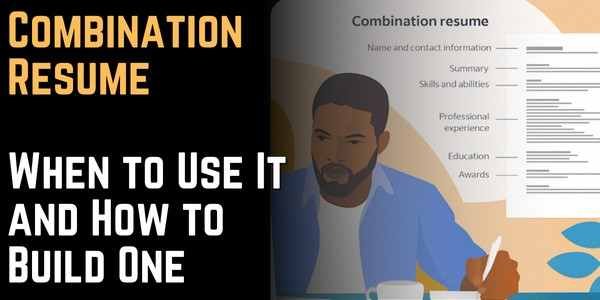
A combination resume format is a blend of functional and traditional formats. It puts skills front and center like a functional resume and uses a reverse-chronological order for work experience like a traditional resume. It’s also known as a hybrid format.
Let’s see how it’s different from the other two formats:
|
Traditional Resume |
Functional Resume |
Combination Resume |
|
|
Work experience |
|
|
|
|
Skills |
|
|
|
|
Layout |
Expected |
Non-traditional |
Creative |
|
Best for |
Highlighting extensive expertise and job history. |
Highlighting the applicant’s skills, especially when relevant work history is short or missing. |
Demonstrating both expertise and skills. |
Why does a combination format work? A traditional hiring approach has made employers struggle to find candidates with the right skills for years. Unsurprisingly, 70% of companies report using skills-based hiring in 2026. A combination format leads with skills rather than job titles. This can help you capture employers with a skills-first approach.
A hybrid format is typically longer than a standard chronological resume. This means you need to write it thoughtfully because every line needs to deliver value to earn its space.
When Does a Combination Resume Format Work Best?
A combination resume isn’t right for every candidate. Its hybrid structure serves best:
- Career changers. If you have strong transferable skills that align with the target role but zero relevant job history, putting your skills to the foreground can help you demonstrate your true value.
- Senior professionals with diverse experience. Some applicants have experience across many different roles and industries. In this case, their transferable skills speak better about their expertise than disconnected job titles.
- Candidates with employment gaps. If your resume has large gaps between jobs, leading with skills will focus the recruiter’s attention on what you can do, not when you’ve had a job the last time.
On the other hand, this format may not work well for:
- Specialists with linear career paths. If you’ve been steadily building your career, your latest job title will likely match the role you target. In this case, traditional resumes work best.
- Entry-level specialists. Students, recent graduates, and people searching for their first job may still have insufficient job-related skills to build an impactful skills section.
How to Write a Combination Resume Section by Section
A combination format can help put your professional strengths front and center and make career history gaps less visible.
Here’s how to write a combination resume section by section to accomplish these goals:
1. Start With a Professional Summary
Begin your resume with a clear summary. It should be your positioning pitch, not an objective statement.
Keep it under 50 words so that it doesn’t get skipped, and cover the following points:
- Who you are (job title/degree/experience, etc.)
- What you offer (the most notable abilities or achievements)
- What job you are targeting
Example:
“Operations manager with 10 years of experience in managing operating budgets and preparing financial forecasts in the manufacturing industry. Skilled in data analysis, vendor negotiation and coordination, and operational cost reduction. Seeking a procurement manager role.”
97.8% of Fortune 500 companies report using an Applicant Tracking System (ATS) in the hiring process. This means you have to tailor your resume to the target job to bypass ATS and make sure your resume reaches a recruiter. To do this, read the job listing and mirror the language from it in your summary – if the role requires “stakeholder management,” use this phrase as a keyword in the summary instead of similar phrases like “working with people.”
2. Lead With a Grouped Skills Section
The skills section located above the experience section is what makes a combination format resume different from a chronological one, so place your skills right after a summary. Adjust this section for every application. Such an approach helps get the most out of this resume format.
Group skills into 3-4 categories matching your target role. Examples of skill categories include:
- Financial Management
- Data Analysis and Reporting
- Vendor & Supply Chain Management
- Client Relations
- Project Coordination
- Leadership & Team Management
Avoid vagueness and fillers in this section. Instead of general words like “team player” and “good communicator,” use 2-3 bullet points to demonstrate measurable outcomes under each category.
Example:
Financial Management
- Managed annual project budgets over $15M, keeping expenditures within 2% of projected goals.
To structure the skills section properly, consider using a specialized resume maker. Tools like BetterCV let you pick a combination layout that positions skills above work experience. This saves time on resume creation and lets you focus on category groupings and content. You can use combination templates in Canva or Google Docs instead of a resume builder, but this will require more manual formatting.
3. Add Work Experience
Place the experience section right under your skills. List job entries in reverse chronological order – starting with the latest one.
For each entry, specify:
- Company name
- Job title
- Location
- Dates
- 2-3 bullets describing responsibilities
Example:
Acme Corp
Marketing Coordinator
Orlando, FL
2020–2023
- Developed content strategy for corporate website and social media
- Managed content calendar
- Coordinated the work of external marketing agencies
Don’t repeat the responsibilities covered in the skills section. Use your work history to demonstrate additional abilities, stability, and career progression.
4. Include Education and Certifications
Put the education section after work experience. For every entry, add the following information:
- Degree
- Institution
- Graduation year
- Optional: GPA, add only if you’ve graduated within the last 2 years and if it’s above 3.5
After education, list what else you have that makes you a good fit, such as:
- Certifications
- Licenses
- Completed courses
These details are particularly important for career changers. They signal intentional skill-building and strengthen your professional profile.
Additional information to include in this section:
- Professional affiliations
- Volunteer work
- Language skills
Add optional data only if it’s relevant and makes you look like a better fit for a chosen role.
Mistakes That Weaken a Combination Resume
Avoid these four mistakes to make your combination resume strong:
- Mistake 1: Duplicate content. The skills and experience sections must complement each other. But they shouldn’t repeat each other. If a specific responsibility or metric appears in your skills, omit it in the experience section and provide new information instead.
- Mistake 2: Vague statements in the skills section. Using generic phrases like “strong communicator,” “leadership,” and “good team player” doesn’t provide value. Instead, support your skills with specific scenarios — you’ve done this task and accomplished this result.
- Mistake 3: Going over two pages. The combination format is generally longer than a standard resume, which is why every piece of information should be included thoughtfully, based on the value it brings. If your resume is over two pages long, especially if you are an early-level or mid-level specialist, cut weak points to make your resume one page long.
- Mistake 4: Neglecting formatting. The format of a resume matters just as much as its content. It affects the readability and the impression you make on recruiters, which is why you must pay due attention to it.
Getting the Format Right
A combination resume isn’t the right format for every situation. It works best when your skills speak about your professional background better than job titles. In particular, it helps career changers, gap returners, and multi-skilled professionals by linking what they can do to their target jobs. So before you create a resume in this format, make sure it’s right for you.
Key Takeaways:
- A combination resume begins with the skills section, followed by a reverse-chronological work history.
- This format works best when a candidate’s skills look stronger than their job titles. It’s especially helpful for career changers and professionals with employment gaps.
- Skills should be grouped into 3-4 relevant categories and supported by bullet points that demonstrate measurable outcomes.
- The ideal length for such a resume is one page, or two pages maximum for senior-level professionals.
- The skills and experience sections shouldn’t repeat one another.
- The skills section should be tailored to each job listing.
FAQ
What is a combination resume?
It’s a hybrid resume format that uses the skills-led layout of a functional resume and the reverse-chronological work history section of a traditional resume. This format implies placing a section with skills grouped into 3-4 categories at the top (under a professional statement), followed by work experience.
Is a combination resume good for career changers?
Yes, career changers benefit the most from a combination resume. This resume format helps them place their transferable skills at the foreground, keeping job titles that don’t directly match the target job in the background. The skills section located at the top instantly drives attention and shows what makes you a good fit, whereas the work history demonstrates professional stability and progression.
How long should a combination resume be?
One page is a golden rule for early-level and mid-level professionals. Senior candidates with 10+ years of work history and diverse experience can make their resumes two pages long. However, it’s important to make sure that every entry you put on a resume adds value. Otherwise, it’s best to keep your resume brief.
Should I use a combination resume for every application?
No. If you are targeting a job that matches your previous position and your career path is linear, a chronological resume is a simpler and more effective option. Use a combination resume when your skills tell a stronger story than your job titles alone – for example, if you are changing your career path, have employment gaps, or have a work history with diverse roles and industries.


About Author
