

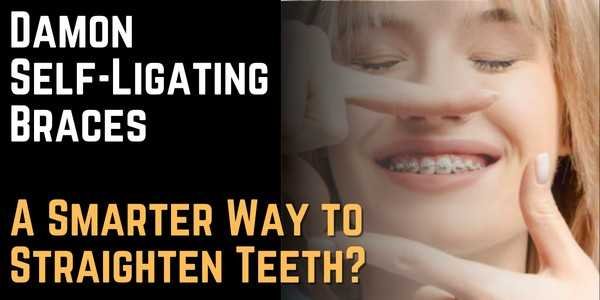
Damon Self-Ligating Braces: A Smarter Way to Straighten Teeth?
For many people, braces still conjure up memories of coloured elastic bands, sore teeth after every appointment, and frequent visits to have everything tightened. While those experiences remain familiar, orthodontics has evolved considerably over the past two decades. One of the biggest innovations has been the introduction of self-ligating braces, more commonly known by their best-known brand name the Damon System.
Across Dubai, more patients are asking about Damon braces as they look for treatment options that are efficient, comfortable, and suited to modern lifestyles. But what exactly makes them different, and do they really live up to the hype?
A Different Kind of Bracket System
At first glance, Damon braces don’t look dramatically different from conventional braces. Small brackets are still attached to each tooth, connected by an orthodontic wire. The real difference lies in the mechanics.
Traditional braces rely on tiny elastic rings or metal ties to hold the wire in place. Damon brackets contain a built-in sliding mechanism that gently secures the wire while allowing it to move more freely. This design reduces friction between the wire and bracket, enabling teeth to respond to lighter, more consistent forces.
It’s a subtle engineering change, but one that has influenced the way many orthodontists approach treatment.
Working With Biology, Not Against It
One of the biggest misconceptions about braces is that straighter teeth come from applying more force. In reality, teeth move because the surrounding bone slowly remodels in response to gentle pressure.
The Damon system is designed around this biological principle. By reducing friction, orthodontists can often begin treatment with lighter, heat-activated wires that encourage gradual tooth movement rather than forceful repositioning. Many patients notice that their teeth feel less tight after appointments, particularly during the initial stages of treatment.
While no orthodontic treatment is completely discomfort-free, the experience is often described as more comfortable than patients expect.
More Than Just Straight Teeth
Perhaps the biggest difference between the Damon philosophy and traditional orthodontics is that the focus extends beyond aligning teeth.
Modern orthodontics increasingly considers how the teeth, jaws, lips and facial muscles work together. In suitable cases, Damon braces can help develop broader dental arches using the body’s natural growth and adaptation, rather than immediately creating space through tooth extractions.
That doesn’t mean extractions are obsolete. Some patients genuinely benefit from them. However, advances in appliance design have expanded the number of cases that can be treated conservatively while still achieving stable, healthy results.
The goal isn’t simply a straight smile—it’s a smile that fits harmoniously within the face.
Is Treatment Faster?
One of the most common questions patients ask is whether Damon braces work faster than conventional braces.
The honest answer is that they can but not always.
For mild to moderate crowding, reduced friction may allow teeth to align more efficiently, and appointments are often spaced slightly further apart because there are no elastic ties to replace. However, complex bite problems, impacted teeth, or jaw discrepancies still require time, regardless of which brackets are used.
Ultimately, treatment length depends far more on diagnosis, treatment planning and patient cooperation than on the brand of bracket itself.
Who Are They Best Suited For?
Damon braces are suitable for teenagers and adults alike. In fact, many adults are now choosing orthodontic treatment later in life, whether to improve oral health, restore confidence, or prepare for restorative dental work.
The system is available in both traditional stainless-steel brackets and more discreet ceramic versions, allowing patients to choose an option that best matches their aesthetic preferences without changing the underlying treatment philosophy.
Rather than asking whether Damon braces are “better” than traditional braces, a more useful question is whether they are the right choice for your particular bite, facial structure and treatment goals.
What Treatment Looks Like?
The treatment journey begins much like any modern orthodontic plan—with digital scans, photographs and detailed records that allow the orthodontist to understand not only the position of the teeth, but also the way the jaws function together.
Once the braces are fitted, a sequence of specially designed wires is used to gently guide the teeth into position. As treatment progresses, stronger wires provide greater control, allowing fine adjustments to the bite and smile. Most patients complete treatment within 12 to 24 months, although every case follows its own timeline depending on its complexity.
Like any orthodontic treatment, long-term success depends on wearing retainers once the braces are removed to maintain the result.
Choosing the Right Orthodontist
As impressive as modern orthodontic technology has become, no bracket system can replace careful diagnosis and clinical expertise.
Experienced orthodontists don’t simply choose a brand of braces they develop an individualized treatment plan based on facial proportions, jaw relationships, growth patterns, gum health and long-term stability. The appliance is simply one of many tools used to achieve that goal.
For this reason, patients considering Damon braces should focus less on finding a clinic that offers the system and more on finding an orthodontist who understands when—and equally importantly, when not—to use it.
The Bottom Line
Damon self-ligating braces represent one of the most significant developments in fixed orthodontic treatment over the past two decades. By combining innovative bracket design with lighter biological forces, they can make treatment more comfortable and efficient for many patients.
But perhaps their greatest contribution isn’t the bracket itself. It’s the broader shift in orthodontic thinking—from simply straightening teeth to creating healthy, functional smiles that complement the face as a whole.
For anyone considering braces in Dubai, that’s a conversation worth having. It reminds us that successful orthodontics isn’t defined by the appliance alone, but by the thoughtful planning and expertise behind every smile.


About Author
