

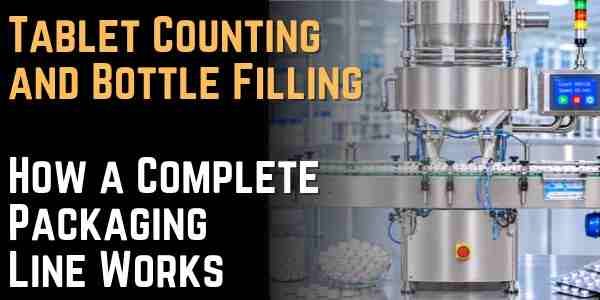
Tablet Counting and Bottle Filling: How a Complete Packaging Line Works
Introduction
Every bottle of tablets on a pharmacy or supplement shelf has passed through a series of coordinated steps before it reaches the buyer. Bottles are sorted, tablets are counted, closures are applied, and labels are checked, all in a set order. Understanding how these steps connect helps buyers and operators plan a line, troubleshoot problems, and keep output consistent. This article walks through a typical bottle packaging line, from the empty bottle to the finished, labeled product.
What a Tablet Packaging Line Does
A packaging line takes loose tablets or capsules and places a specific number into each container. At the center of most lines is a tablet counting filling machine, which receives bulk product, counts it, and delivers the right quantity into each bottle. Every other station exists to support that goal: preparing the container, protecting the contents, closing the bottle, and identifying it correctly.
Why the Order of Stations Matters
Each station depends on the one before it. A bottle that arrives crooked at the filling point can cause spillage. A bottle filled with the wrong count will fail downstream checks. Because errors compound, most lines are arranged so problems are caught as early as possible.
The Counting and Filling Stage
This stage separates tablets into a controlled flow, detects each one as it passes, and releases the set count into the container below. Counting methods vary between designs, and the best fit depends on the product’s size, shape, and fragility. Specifications should come from the manufacturer for your specific model rather than from general assumptions.
Feeding and Separating Tablets
Bulk tablets are loaded into a hopper and guided toward the counting area. A vibrating or similar feeding mechanism spreads the product into lanes so that tablets pass the sensor one at a time. Smooth, even feeding is important because crowded or uneven flow is a common cause of counting errors.
Detecting and Releasing the Count
As tablets pass the detection point, the machine registers each one. Once the target number is reached, the flow is directed into the waiting bottle, and the next bottle moves into position. Operators set the target count in the controls, and changing it is usually a routine adjustment.
Preparing Bottles Before Filling
Bottle Feeding and Orientation
Empty bottles are often loaded in bulk and then arranged so they travel upright and evenly spaced on a conveyor. Proper spacing allows each bottle to stop correctly beneath the filling point.
Cleaning Options
Some lines include a step to remove dust or loose particles from the bottle before filling. Whether this is needed depends on the product, the bottle material, and the facility’s own quality requirements.
Steps After Filling
Adding Protective Items
Depending on the product, filled bottles may receive additional items, such as a desiccant or a layer of filler material. These protect the contents, and the choice should follow the product’s own requirements.
Capping and Sealing
Next, a cap is placed and tightened. Many products are also sealed with a tamper-evident feature, such as an induction seal. Correct closure matters for both product protection and consumer confidence, so these stations are typically set up carefully and checked regularly.
Labeling and Coding
Labels identify the product and carry required information. Many lines also print or mark batch details so each bottle can be traced. Accurate label placement and readable coding are usually verified before the bottle moves on.
Inspection and Quality Checks
Checking the Count and the Closure
Inspection can happen at several points. Some lines weigh bottles or use sensors and cameras to confirm that bottles are filled, capped, and sealed as expected. Which checks are used depends on the product and the quality system in place.
Handling Rejected Bottles
When a bottle fails a check, the line can divert it automatically so it does not mix with approved product. Setting clear procedures for what happens to rejected bottles keeps the line organized and records accurate.
Keeping the Line Running Smoothly
Routine Cleaning and Changeover
Tablets can leave dust or residue, so regular cleaning is part of normal operation. When switching between products, operators clean the contact surfaces and adjust settings to match the new tablet and bottle. Following the manufacturer’s guidance for each machine helps prevent cross-contamination and mix-ups.
Operator Training and Documentation
Even well-designed equipment depends on informed operators. Clear instructions, trained staff, and documented settings make results more repeatable from one shift to the next.
Planning a Line for Your Needs
Before choosing equipment, it helps to gather a few facts about your own products:
- The types of tablets or capsules you will run, including size and shape
- The range of bottle sizes and closure types
- The additional items, such as desiccants, that each product requires
- The labeling and coding requirements for your market
- The level of inspection your quality procedures call for
Sharing these details with a supplier allows them to recommend a suitable configuration and confirm the exact specifications for each machine.
Conclusion
A bottle packaging line is a chain of connected steps, each one preparing the way for the next. Bottles are fed and positioned, tablets are separated and counted, protective items and closures are added, and labels and inspections confirm the result. The tablet counting filling machine sits at the heart of this process, but its performance depends on the stations around it and on consistent cleaning, setup, and operator care. By understanding how the whole line fits together, producers can choose equipment more confidently and keep their packaging process organized and dependable.


About Author
