

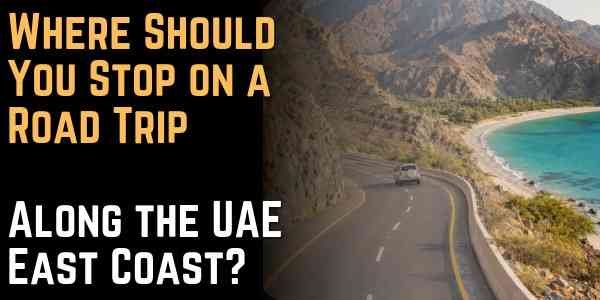
Where Should You Stop on a Road Trip Along the UAE East Coast?
Most people treat the UAE’s east coast as a day trip: leave Dubai early, drive to a beach, swim, eat, drive back before dark. It works, but it misses most of what the coast offers. The east coast is not one destination. It is a string of towns across Sharjah and Fujairah, strung along a narrow strip between the Hajar Mountains and the Gulf of Oman, and the best parts happen at hours a day trip cannot reach: sunrise over the sea, the waterfall lit up after dark, the water at its calmest early in the morning.
That is why the order of stops, and where you spend the night, matters more than the list of sights. Khor Fakkan sits roughly in the middle of the coast, so it makes a natural base, and more travellers now book a night or two there, through hotels or holiday-home operators such as Khorfakkan Stays, rather than turning back at sunset. Getting there has become much easier. The 89 km Sharjah–Khor Fakkan Road, built at a cost of AED 6 billion, was designed to cut the drive between the two cities to around 45 minutes, according to Zawya’s report on its opening.
The Drive In: Tunnels and a Dam
The road itself is the first stop worth slowing down for. It crosses desert, plains and mountains, and runs through five tunnels, the longest of which, Al Sidra, is 2,700 m and was described at opening as the longest covered mountain tunnel in the Middle East, according to the same report. Coming from Dubai, the scenery changes from flat sand to steep rock in a matter of minutes.
Just off the highway, Al Rafisah Dam is an easy first break. It has been upgraded with a visitors’ centre, a rest area and watersports including kayaks and pedalos, The National’s Khor Fakkan guide notes. It is a good place to stretch your legs, and a calmer alternative to the beach if you are travelling with young children.
Khor Fakkan: The Middle of the Coast
Khor Fakkan rewards an unhurried afternoon. The redeveloped beach runs for about 2.5 km, with play areas, food trucks and a beach library, and at the southern end of the Corniche stands a triangular Portuguese fort dating to 1635, The National reports. Souq Sharq, a restored heritage village, sells spices, herbs and handicrafts and has a free traditional crafts museum.
Save the waterfall for after dark. The man-made fall, about 45 m high on a natural cliff above the Corniche beside the Khor Fakkan Amphitheatre, is lit in the evening, and that is when most people say it looks best. A day-tripper usually sees it in harsh midday light, if at all. An overnight guest sees it the way it was designed to be seen.
Into the Hills Above Town
Khor Fakkan’s mountains are as much of an attraction as its beach. Al Suhub Rest House, a saucer-shaped building on a hillside about 30 minutes’ drive from town, has a café and wide views over the coast. Najd Al Maqsar Heritage Village is a restored settlement of 13 mud and stone houses on the slopes of the Hajar Mountains, with a 300-year-old watchtower, and restoration there is ongoing.
Shees Park, opened in 2020, adds a 25 m waterfall, an artificial lake, barbecue spots and mountain walkways across about 11,000 square metres. The National recommends it in the cooler months, and that advice applies to the whole mountain loop: these are morning or late-afternoon stops for most of the year, not midday ones.
Shark Island and the Water
For many visitors, the reason to come is the sea. Shark Island, a small rocky islet reached by a short boat ride from the south-eastern side of the bay, is popular for snorkelling and diving, and blacktip reef sharks are among the species people go to see. Boat operators and dive centres in town run trips out to it.
Morning departures usually mean calmer water and better visibility, and they are another reason to stay the night. Leaving Dubai at dawn to catch an early boat is possible, but it turns a relaxed trip into a race against the clock.
North to Al Bidya
A short drive north along the coast brings you to Al Bidya Mosque in Fujairah, widely described as the oldest mosque in the UAE. Its age is debated: research by Fujairah’s archaeology department and the University of Sydney dates it to 1446, while a 2017 study suggested around 1599, Gulf News reports. It is small, about 6.8 m square with room for some 70 worshippers, built from stone, mud-brick and clay, with four domes resting on a single central pillar and no minaret.
It is still an active place of worship, so dress modestly, keep voices low and avoid arriving at prayer times. Combine it with Dibba further north for a half-day loop from Khor Fakkan.
South to Kalba
Heading south past Fujairah city brings you to Kalba, the quietest of the coast’s stops and the one most often skipped. Al Qurm Protected Area covers more than 500 hectares of mangroves, marshes and salt flats and is a breeding ground for rare birds including the Arabian collared kingfisher, according to Gulf News’ guide to Sharjah’s east coast. The Kalba Waterfront beside it has restaurants and a large children’s play area.
Kalba is best in the early morning or late afternoon, when birdlife is most active and the light on the mangroves is softer. It also works as the last stop of a trip, before heading back inland.
A Two-Day Plan That Uses the Coast’s Best Hours
Here is one way to put the stops in order:
- Day 1, morning: drive the Sharjah–Khor Fakkan Road, stopping at Al Rafisah Dam.
- Day 1, afternoon: Khor Fakkan beach, the Portuguese fort and Souq Sharq.
- Day 1, evening: the waterfall and amphitheatre after dark, then dinner on the Corniche.
- Day 2, early morning: boat trip to Shark Island for snorkelling.
- Day 2, late morning: north to Al Bidya Mosque, avoiding prayer times.
- Day 2, afternoon: south to Kalba and Al Qurm’s mangroves before the drive home.
Done as a day trip, the east coast is a beach. Done this way, it is a region.
Opening hours, boat schedules and site access change, and summer heat limits outdoor activity for much of the day, so check timings locally and plan the mountain and mangrove stops for the cooler parts of the day.


About Author
